
Curriculum: 2022 YBM Elementary Grade 5

  • Balloon Pop Darts PPT Game

    Balloon Pop Darts PPT Game

    This PowerPoint game helps ESL/EFL students review vocabulary and practice speaking in a fun and simple game format, complete with animations and sound effects.

    I based this game off the classic darts game in carnivals, where players throw darts to pop as many balloons as they can to win a prize. In this version, there is a prize hiding behind each balloon that is revealed once the balloon is popped. The prize you get determines your fate in the game!

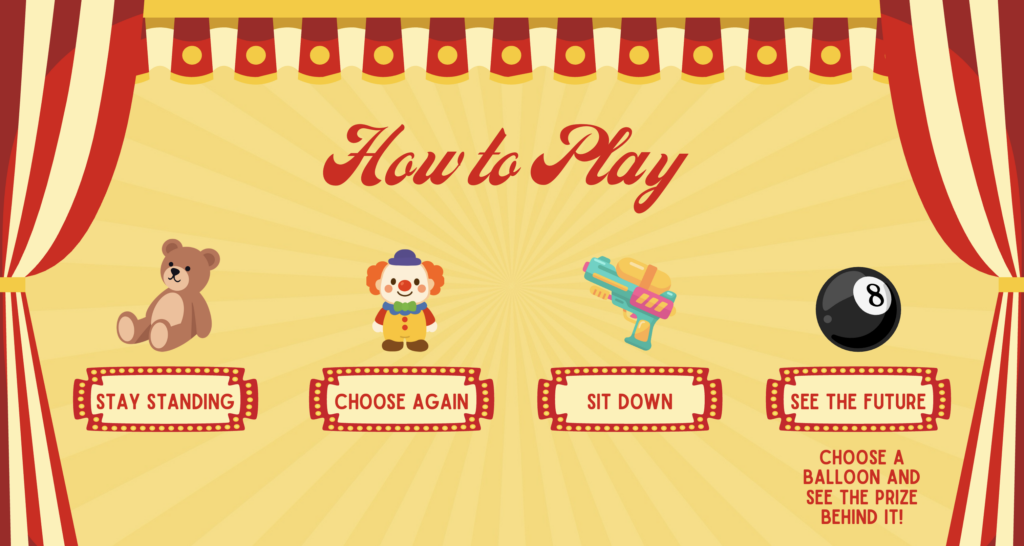
    How to Play

    • Everyone stands up. (This is played as an individual game).
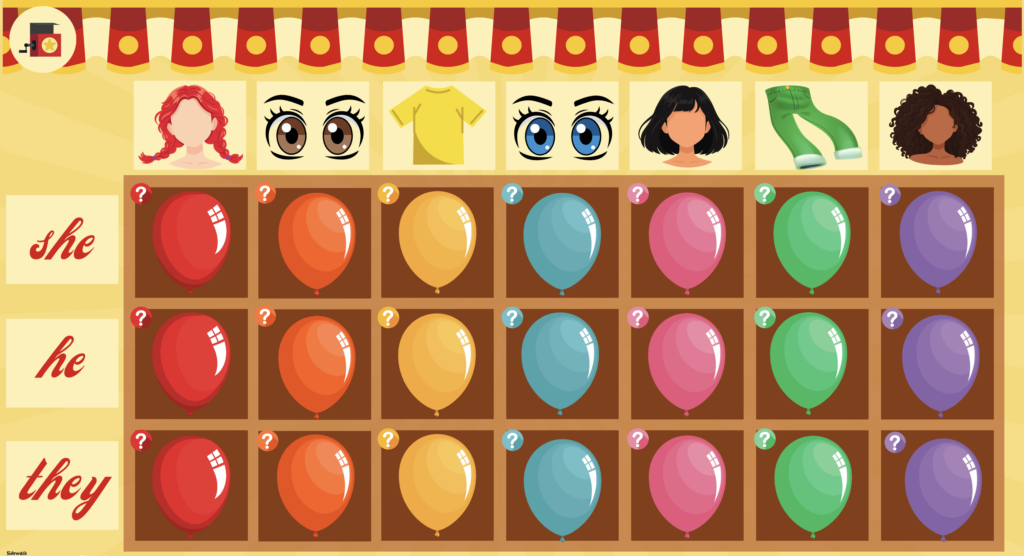
    • Students take turns making a sentence to choose a balloon.
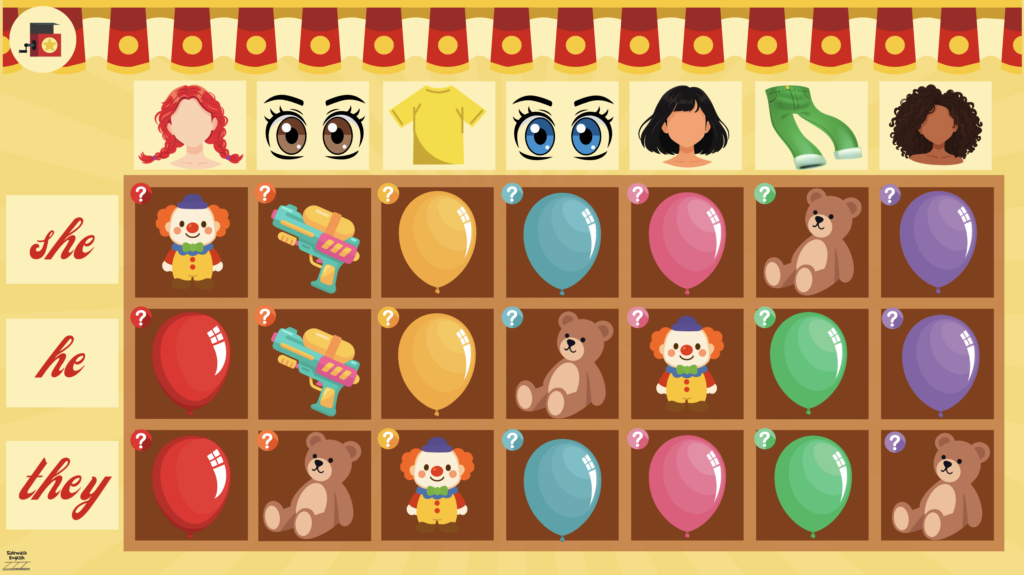
    • The teacher clicks on the balloon to reveal a prize.
    • The prize can be a teddy bear, water gun, magic 8-ball, or clown doll.
    • Teddy bear means keep standing, water gun means sit down (you’re out!), magic 8-ball means see the future, and clown doll means choose again (the student must make another sentence!)
    • If a student gets the magic 8-ball, they must make a sentence to choose another balloon. Then the teacher will click on the question mark in the top left corner of the box holding the balloon. This will preview the prize hidden behind the balloon, so everyone in the class can “see the future.” This adds a memory element to the game as students need to remember which prize was revealed behind which balloons.
    • You can pause or play the background music by clicking on the music box in the top left corner of the slide.
    Download

    You can download the editable pptx file below.


    Lesson Notes

    Grade / Level:
    Grade 3-6 • Elementary EFL

    Skills Practiced:
    Speaking

    Time Required:
    ~15-20 minutes for 22 students

    Teacher Notes

    • The game is set up to practice describing appearances. For example, “She has blue eyes,” “He has curly hair,” or “They’re wearing green pants.”
    • Since it is set up as a grid where students choose a row and column to select a balloon, you could change the words and pictures representing each row to practice a different topic. For example, using objects and prices to practice asking “How much is this dress?” and answering “It’s $8.” Feel free to use the PowerPoint to suit your needs.

    Related Resources
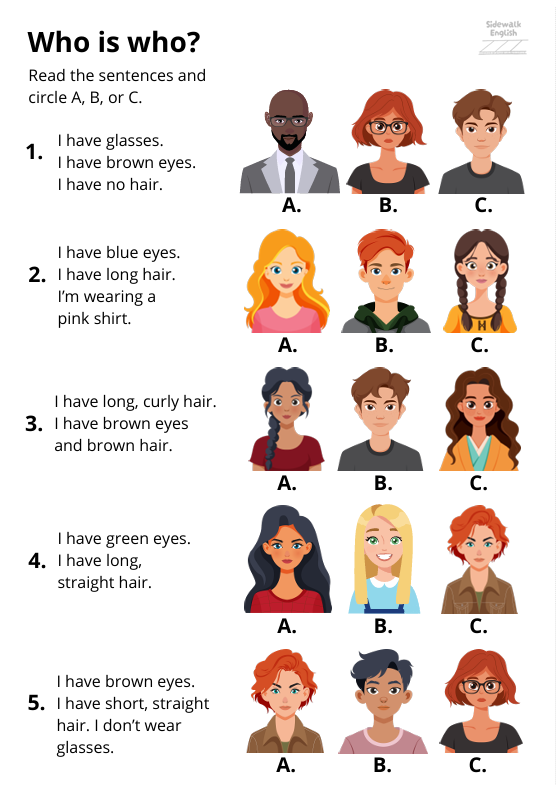
  • Who is Who Worksheet

    Who is Who Worksheet

    This ESL/EFL worksheet teaches students about describing appearances. You can even have the students play a mini round of Guess Who in pairs using the backside of the worksheet if you have extra time.

    Key expressions include: She has long, curly hair. He has short, straight hair. She is blonde. He has blue eyes. He’s wearing an orange shirt.

    This worksheet is designed as a half sheet on A4 paper, so you will need to cut the pages in half. Make sure you set the printer to flip on the short edge!

    Student Version:

    Answer Key:

    Lesson Notes

    Grade / Level:
    Grade 5 • Upper Elementary EFL

    Topic:
    Appearances

    Skills Practiced:
    Reading

    Activity Type:
    Fill in the blank, Multiple choice

    Preparation:
    Print double-sided in color on A4 paper and cut in half

    Time Required:
    ~10 minutes for 22 students

    Grouping:
    Individuals

    Learning Objectives

    By the end of this activity, students will be able to:

    • Read descriptions of appearances

    Before the Activity

    Briefly review the target vocabulary or expressions.

    After the Activity

    1. Review answers together as a class.
    2. Play Guess Who? in pairs. Student A picks a character from the backside of the worksheet. Student B guesses who it i by asking appearance-based yes or no questions.
    3. Another variation: as the teacher, pick one of the characters on the worksheet. Have students ask questions to guess who you picked.

    Teacher Notes

    • This is good reading practice to review vocabulary such as curly or straight hair, blonde or brunette, brown or blue eyes, etc.
    • Since this worksheet is reading heavy with very little writing, students can finish quite quickly, so either use as a quick warm up activity or you can extend by having students use the worksheet to do some speaking practice.

    Related Resources

  • Magic Lamp Aladdin ESL Speaking PPT Game

    Magic Lamp Aladdin ESL Speaking PPT Game

    Magic Lamp Aladdin EFL Speaking Game

    This PowerPoint game helps students review vocabulary and practice speaking in simple sentences in a fun and simple game format, complete with animations and sound effects.

    I originally created this game to pair with my lesson on the Disney movie Aladdin, so the game also features Aladdin characters like the magic carpet, Abu the monkey, and Rajah the tiger.

    I put this together really quickly when I realized the day before class that we might have 5-10 minutes of extra time, and I hate having even 5 minutes of time with nothing to do, so I created an entire PPT game as a contingency plan and it turned out to be a success!

    How to Play

    • Students are divided into teams (I usually do 2, but any number works)
    • Students from each team take turns saying a sentence or vocabulary word to pick a magic lamp
    • The teacher clicks on the magic lamp to reveal points or effects
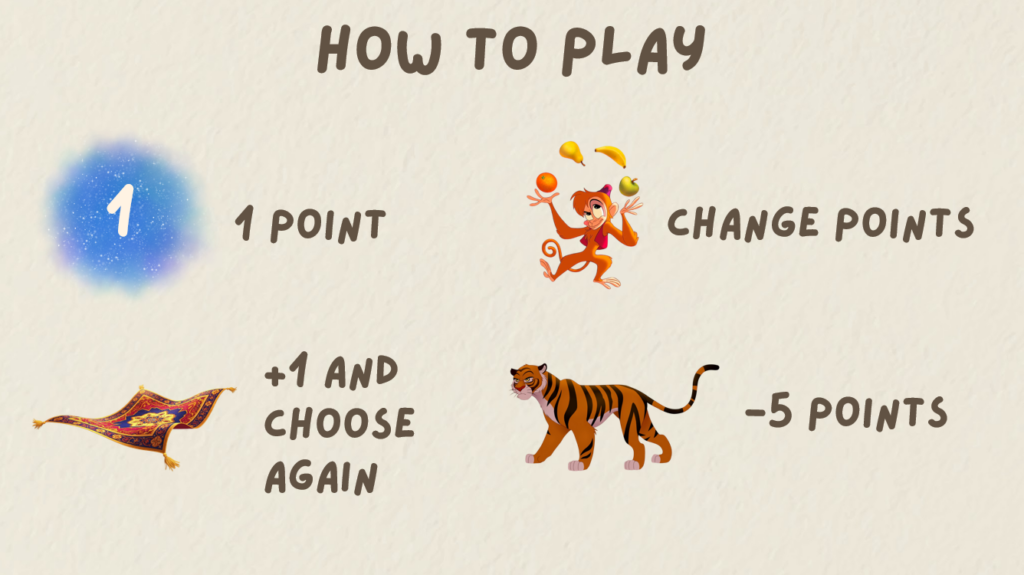
    • Abu the Monkey = switch points with another team
    • Magic Carpet = +1 point and choose again
    • Rajah the Tiger = lose five points
    • There are 3 rounds included

    Download

    It’s a simple and classic EFL type of game, but students get really competitive and they love it every time! You can download the editable pptx file below.


    Lesson Notes

    Grade / Level:
    Grade 3-6 • Elementary EFL

    Any elementary grade level can enjoy this game, but I found 4th and 5th grade enjoy it the most. They are young enough to enjoy a simple game like this but old enough to read all the words more easily!

    Skills Practiced:
    Reading, Speaking

    Time Required:
    ~15 minutes for 22 students

    Teacher Notes

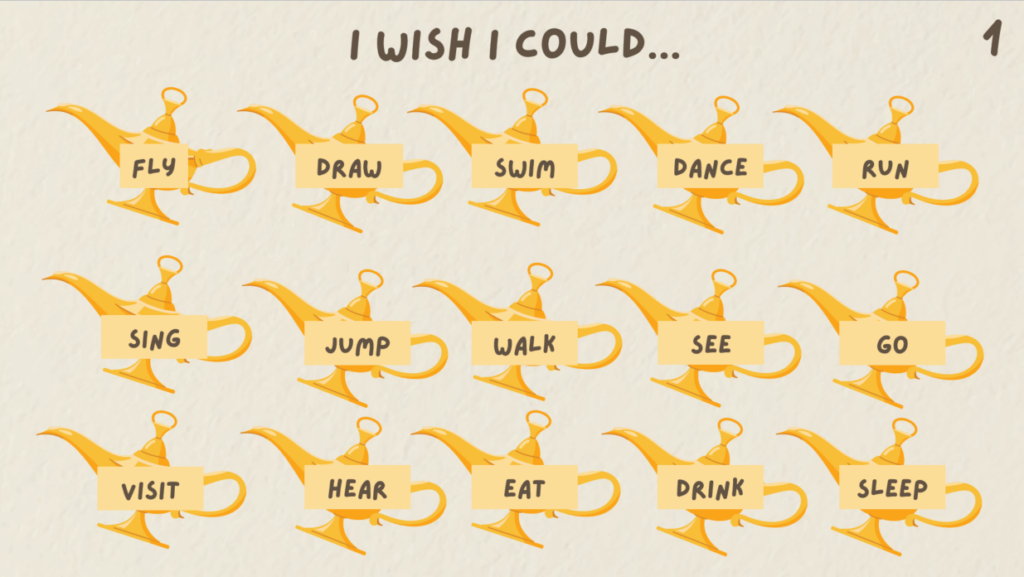
    • You can edit the PowerPoint however you like. The game currently is set to up teach the structure “I wish I could…” which fits with the magic lamp theme.
    • You could also change it to “I want to….” or “Don’t … ,please” or you could just have students read vocabulary words or try making their own sentences with the words displayed.

    Related Resources

  • Word Search Review + All About Me (YBM Grade 5 Lessons 1-6)

    Word Search Review + All About Me (YBM Grade 5 Lessons 1-6)

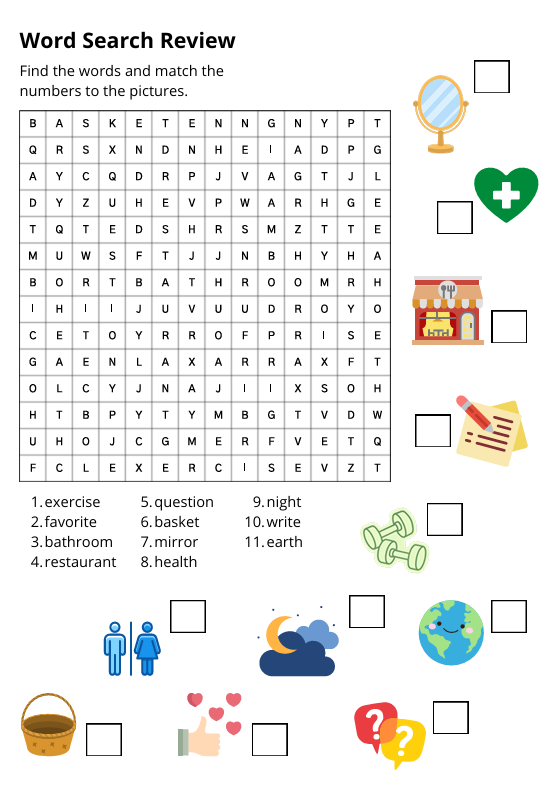
    This ESL/EFL worksheet reviews important vocabulary and expressions for elementary English learners. On the front page word search, students find the words, then match the numbers to the correct pictures to reinforce the meanings of each word. On the back, students can apply what they’ve learned by answering questions about themselves.

    This is specifically designed to review the first semester of the YBM (Kim) Grade 5 curriculum in Korea (lessons 1-6).

    It took my class of 22 students about 15 minutes to finish this worksheet.

    This worksheet is designed as a half sheet on A4 paper, so you will need to cut the pages in half.

    It’s double-sided, so make sure when you print, it’s set to two-sided, flip on the short edge!

    You can download students versions with either English or Korean instructions and the answer sheet below.

    Student Version (Korean Translation):

    Student Version (English):

    Answer Key:

    In the Korean translated version of this worksheet, I included both Korean and English instructions on the All About Me page because I felt students would benefit from exposure to simple sentences using the word “yourself” in English.

    Other related materials:

  • Prepositions PPT Game: Cats in the Kitchen

    Prepositions PPT Game: Cats in the Kitchen

    Cats-in-the-Kitchen-PPT-Game

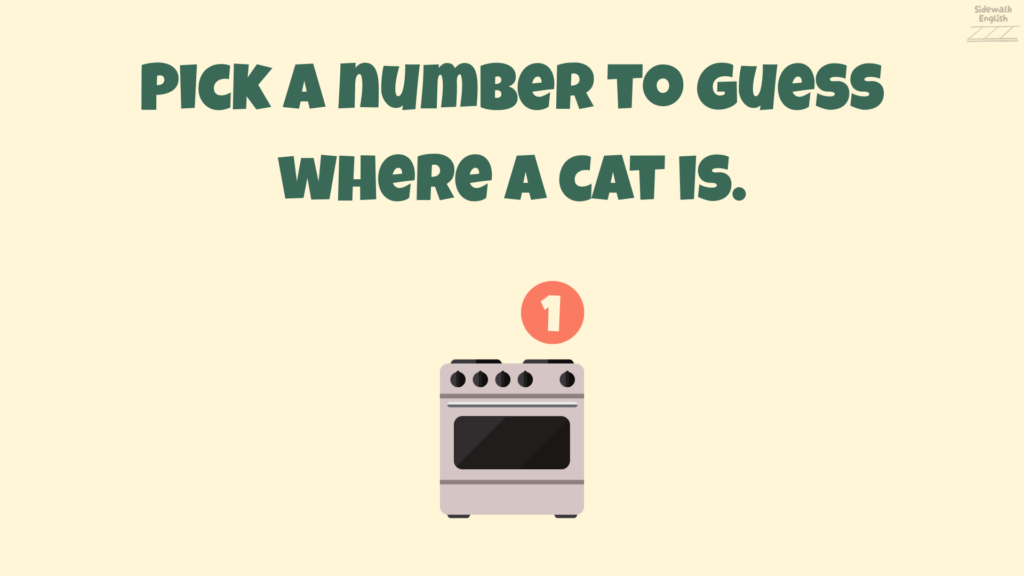
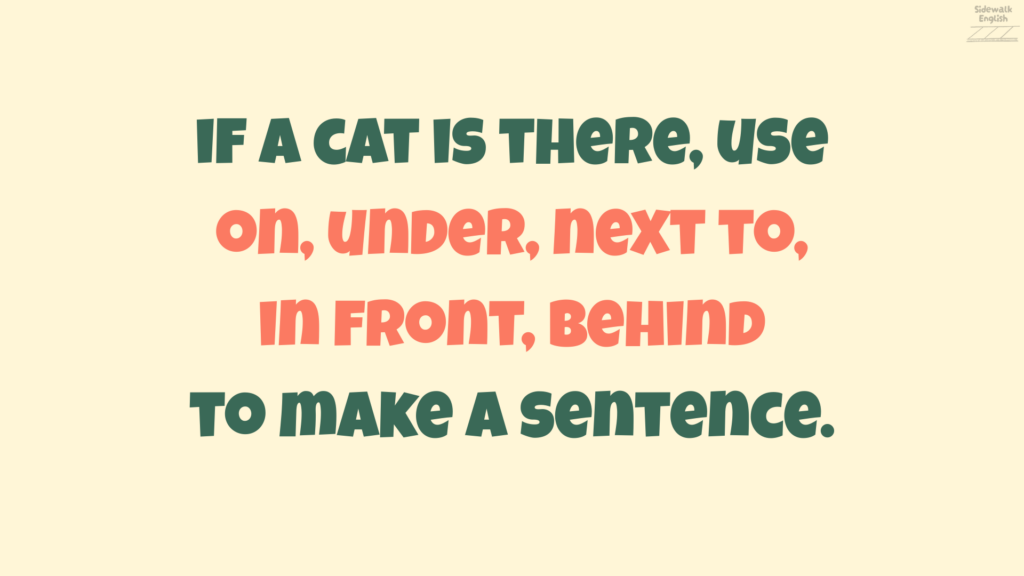
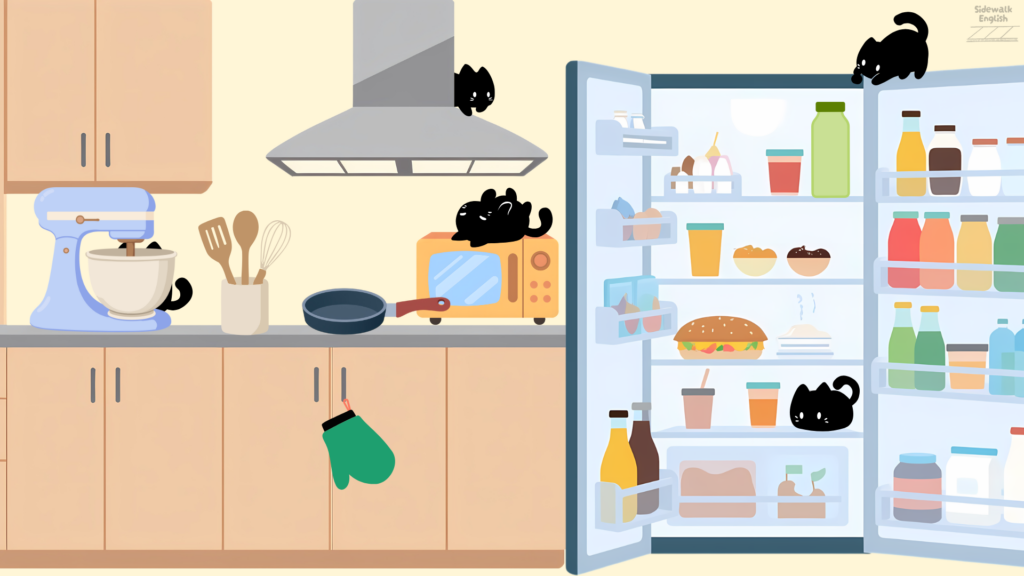
    Cats in the Kitchen is a speaking PPT game that helps ESL/EFL students practice prepositions of place and kitchen vocabulary. Teams search for five hidden cats and earn points by making complete sentences using the correct preposition.

    How to Play

    1. Divide the class into teams.
    2. A student chooses a number.
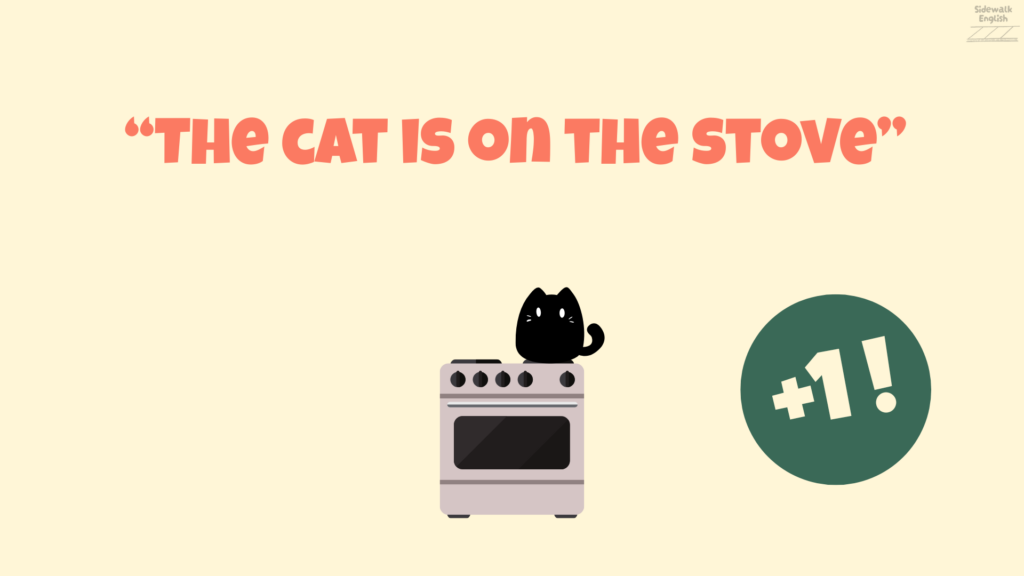
    3. If a cat appears, the student makes a sentence (e.g. The cat is under the table.)
    4. If the sentence is correct, the team earns 1 point.
    5. If there is no cat, the turn passes to the next team.
    6. The team with the most points wins!

    You can download the full PPT game below.

  • Secret Cipher Spy Worksheet

    Secret Cipher Spy Worksheet

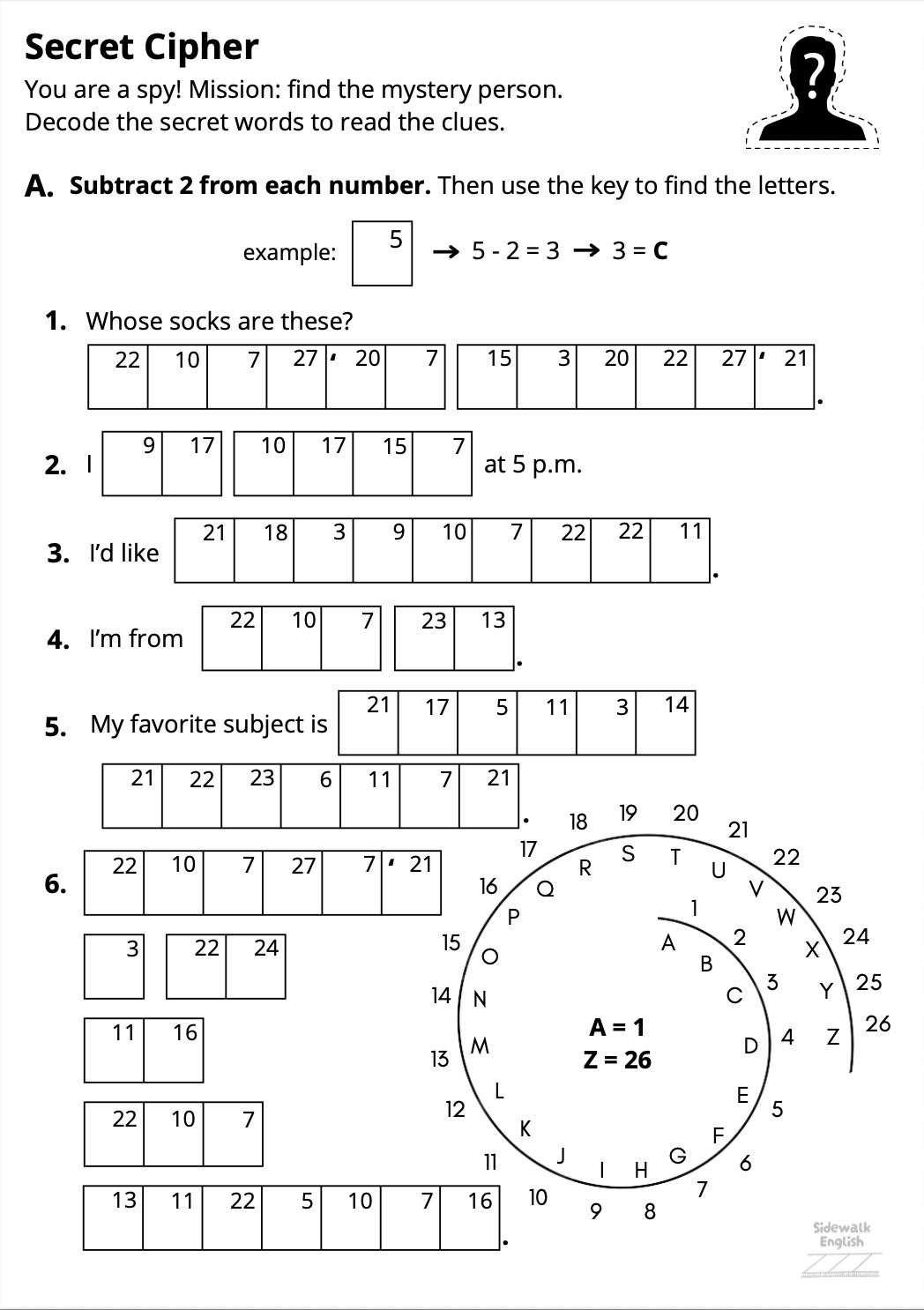
    In this ESL/beginner English worksheet, students use a cipher to decode secret messages, then use those messages to identify a mystery person based on provided clues! This is a fun and exciting way to practice spelling, reading comprehension, and logical reasoning skills in English.

    You can read a more detailed explanation of the activity toward the end of this page here.

    This is specifically designed to review the first semester of the YBM (Kim) Grade 5 curriculum in Korea (lessons 1-6), but it will work well for any beginner level English class or English practice for young learners.

    This worksheet is designed as a half sheet on A4 paper, so you will need to cut the pages in half.

    You can download students versions with either English or Korean instructions and the answer sheet below.

    Student Version (Korean Translation):

    Student Version (English):

    Answer Key:

    More Details

    When creating this worksheet, I first started with the spiral cipher because I wanted students to really focus on precise spelling of the words in each key expression. Toward the end of the semester, my students have no problem with speaking as that is my main focus in most classes, but a lot of them struggle with writing.

    I wrote the secret messages and created the cipher to decode them first, then added the story background. In the final worksheet instructions, I left out several details of the story that originally formed in my head while designing the puzzle for the sake of saving space and maintaining clarity. I’ll explain it here for some extra context. If teaching this lesson, you can choose to explain to the students this way, or just have them complete the activity as explained in the worksheet instructions.

    The students are spies trying to find the identity of a secret target. In Part A of the worksheet, they decode the messages.

    They have anonymously received encoded transcripts of a phone call made by the target, so you can assume the secret messages are statements made directly by the mystery person on a phone call. Decoding the messages allows you to learn more about the background and preferences of the mystery target.

    In part B, they identify the mystery person. I provide a “suspect list” and details about each suspect. Based on what they know about the mystery person from Part A, students can deduce the identity of the target.

    In part C, they write their final spy report. This part sums up the whole activity and checks students’ understanding of the work they’ve done in parts A and B. Students fill out key characteristics of the mystery person such as favorite food and nationality. This requires them to know the correct identity of the mystery person (part B) and understand the sentences they decoded in part A.

    Have fun with this one!

    Other related materials:

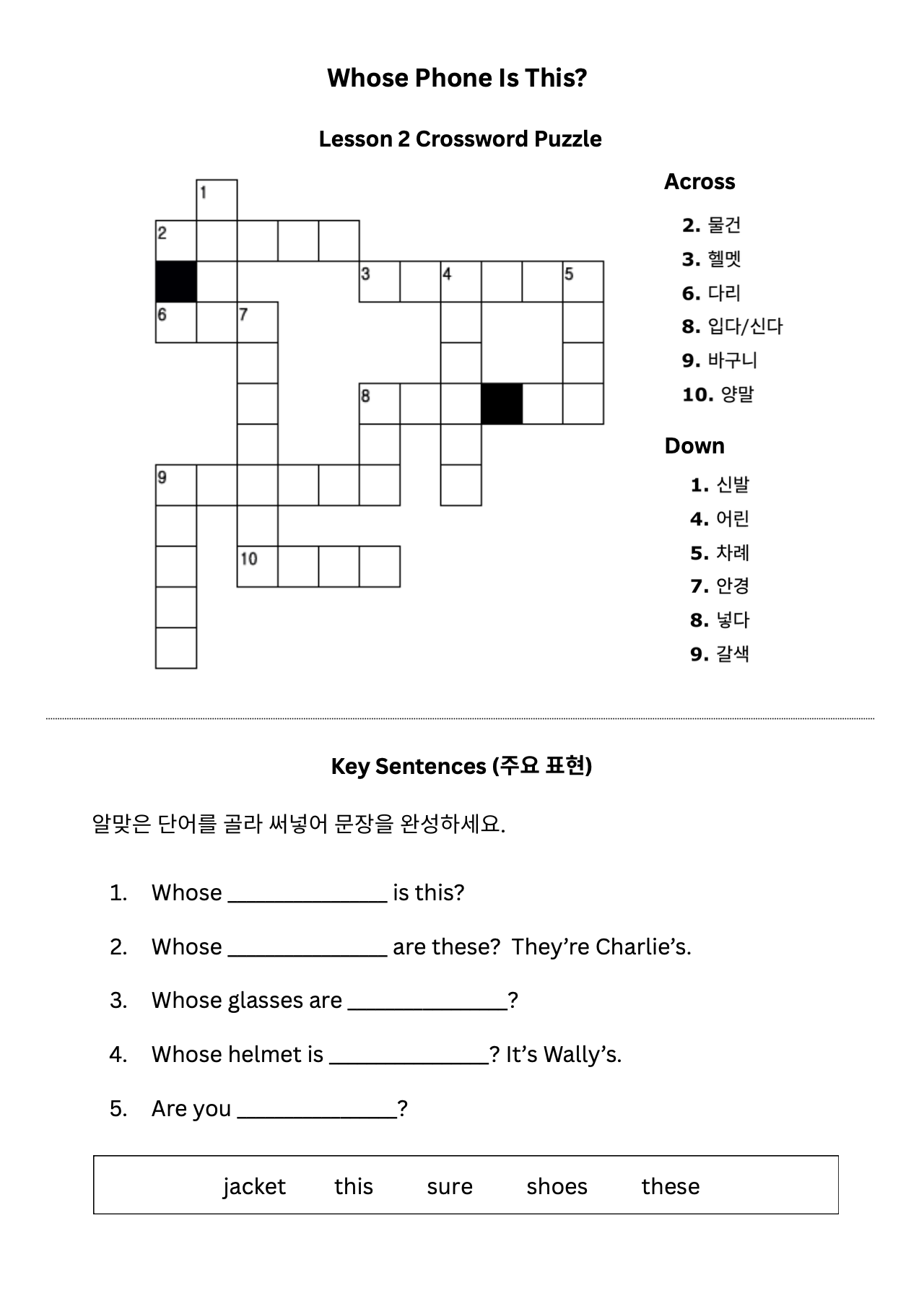
  • Whose Phone Is This Crossword Worksheet for Korean Speakers

    Whose Phone Is This Crossword Worksheet for Korean Speakers

    This is a worksheet targeting English words and phrases for a lesson on possessives, specifically for Korean speakers as the crossword puzzle clues rely on using Korean translations.

    This is specifically made to review content from YBM (Kim) elementary grade 5, lesson 2 “Whose Phone Is This?”

    I paired this with my Where Are You From Word Search Worksheet and printed double-sided on A4 paper to review both lessons in one class. Finishing both sides took about 30 minutes for my 5th graders. If you want to print both together, I’ve added a pdf that includes both worksheets as well (for Korean speakers).

    Single Sheet Version:

    Combined Version:

    Other related materials:

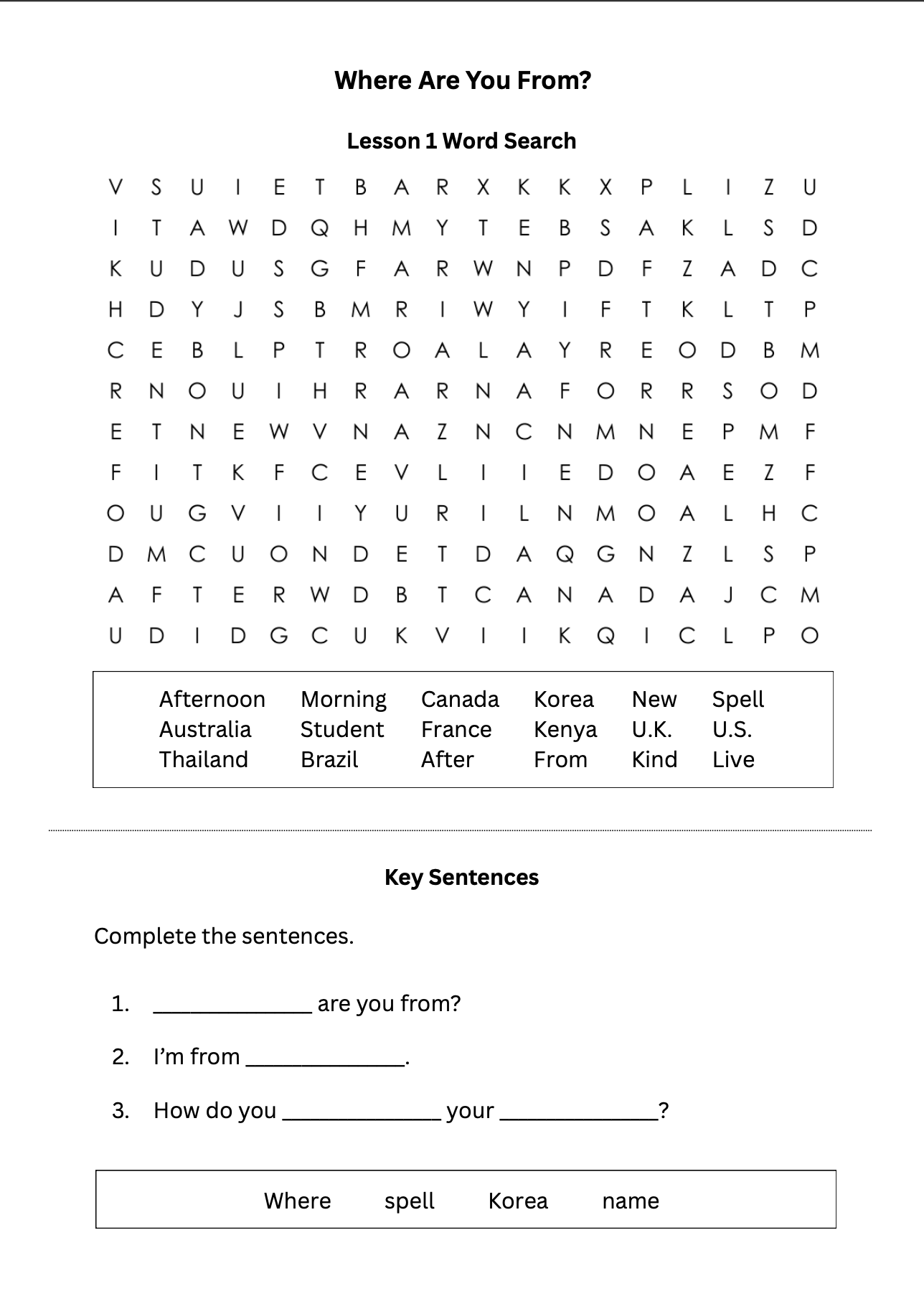
  • Where Are You From Word Search Worksheet

    Where Are You From Word Search Worksheet

    A simple EFL worksheet with a word search and fill-in-the-blank questions to focus on key words and expressions related to the lesson “Where are you from?”

    This is specifically made to review content from YBM (Kim) elementary grade 5, lesson 1.

    You can download the PDF in all English or with Korean translations.

    I paired this with my Whose Phone Is This Crossword Worksheet and printed double-sided on A4 paper to review both lessons in one class. Finishing both sides took about 30 minutes for my 5th graders. If you want to print both together, I’ve added a pdf that includes both worksheets as well (for Korean speakers).

    Single Sheet Version (English):

    Single Sheet Version (Korean Translation):

    Combined Version:

    Other related materials:

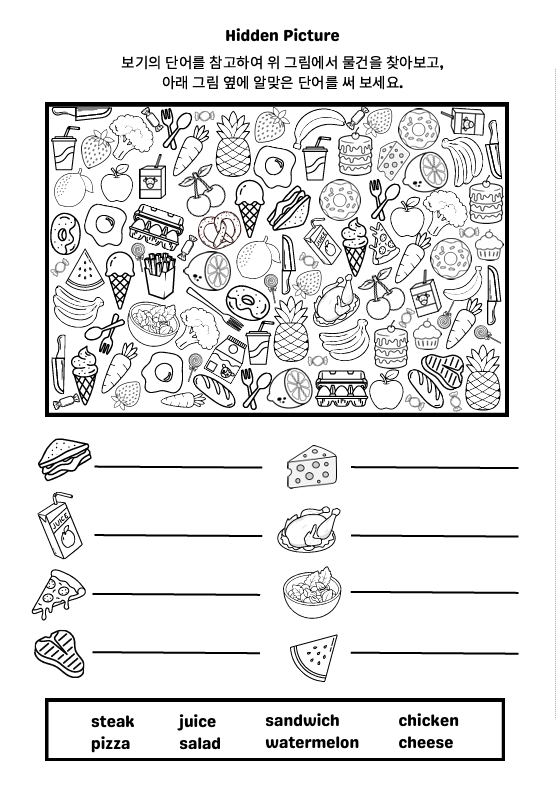
  • Food Vocabulary Hidden Picture

    Food Vocabulary Hidden Picture

    This is a quick activity to review food word in English for lower level students or as a supplementary exercise.

    I’m offering this as a separate download here in case it is useful, but I have also paired it with the Food Vocabulary Word Maze sheet.

    This worksheet is designed as a half sheet on A4 paper, so you will need to cut the pages in half.

    Student Version (Korean Translation):

    Answer Key:

    Other related worksheets:

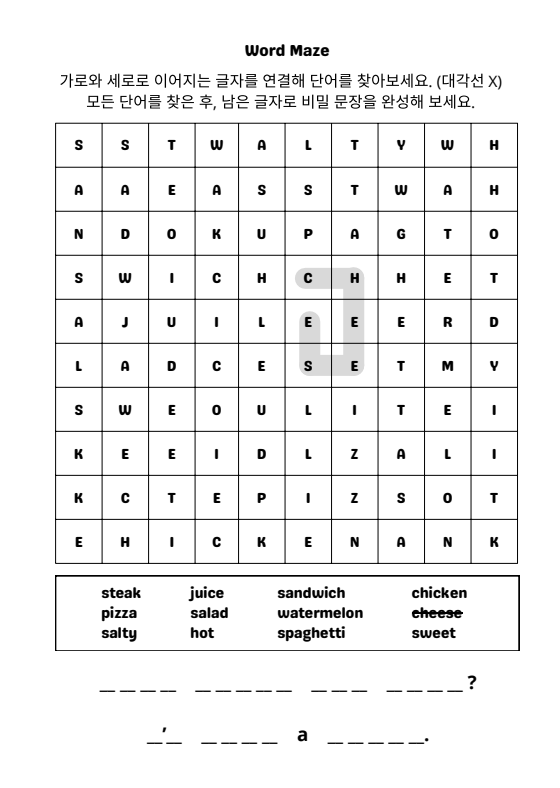
  • Food Vocabulary Word Maze + Hidden Picture

    Food Vocabulary Word Maze + Hidden Picture

    In this word maze, students practice recognizing food related vocabulary in English.

    This is similar to a word search or a traditional word maze but with a twist. Letters can be connected horizontally or diagonally (not diagonally!) to form the word. They do not have be in a straight line, as long as they are connected continuously. Students find all the words individually (they are not all connected along one path as in a traditional word maze).

    The formatting of the lines in the PDF slides and worksheet seems to work better in Google Chrome than Microsoft Edge.

    The accompanying PDF slides help explain how to solve this with a mini example. You can download the explanation and solution here:

    The back of the sheet is a quick hidden picture and writing activity to practice writing food words more and to provide an easier activity for some students who prefer it. This took my class of 22 students about 20 minutes.

    If you want to download the hidden picture activity separately, you can download it here: Food Vocabulary Hidden Picture.

    This worksheet is designed as a half sheet on A4 paper, so you will need to cut the pages in half.

    It’s double-sided, so make sure when you print, it’s set to two-sided, flip on the short edge!

    You can download students version with Korean instructions below.

    Other related materials: