Lesson: Lesson 07

  • On the Run Directions PPT Game

    On the Run Directions PPT Game

    I had a lot of trouble finding a PPT game to teach about giving directions in English that was both relevant to my lesson and not too complex or high level. That’s why I decided to design my own PPT game to teach a lesson on giving directions with transportation methods and prepositional phrases, complete with sound effects, transitions, and animations!

    Key Expressions
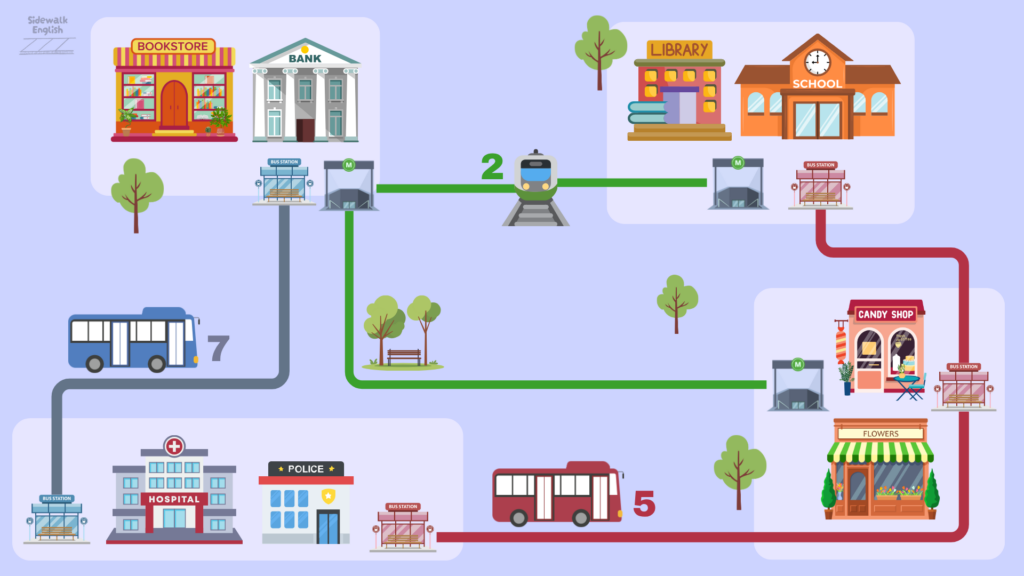
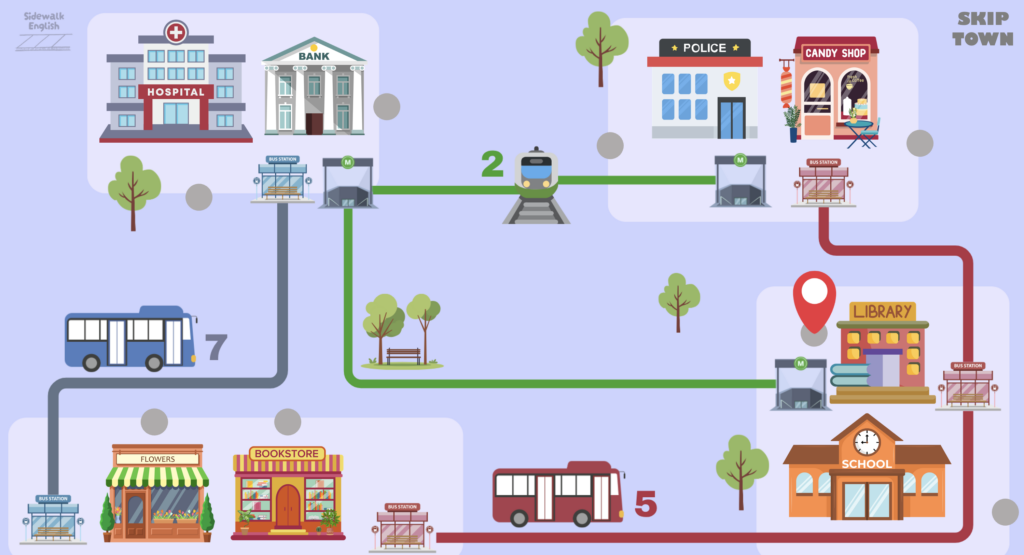
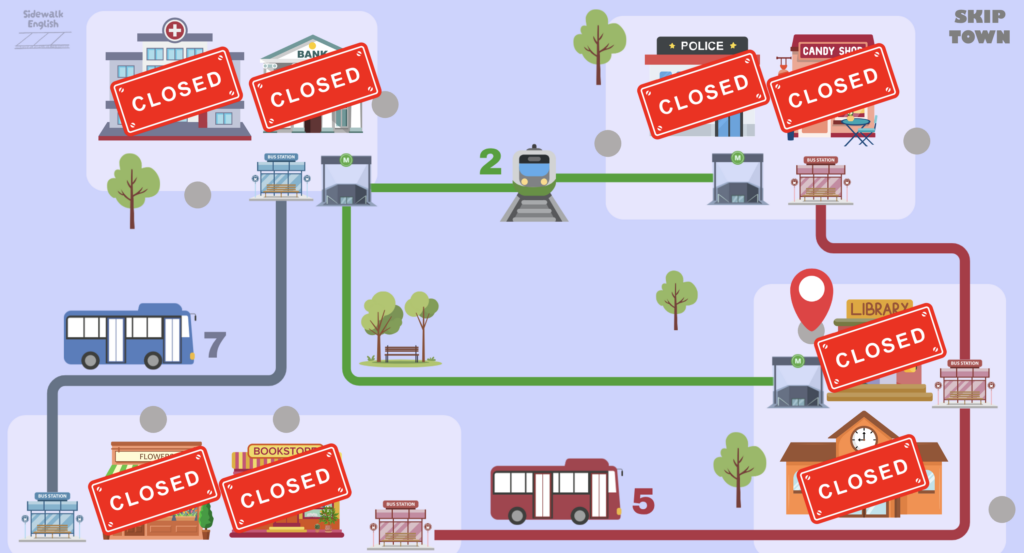
    In this game, students are shown a map like this:
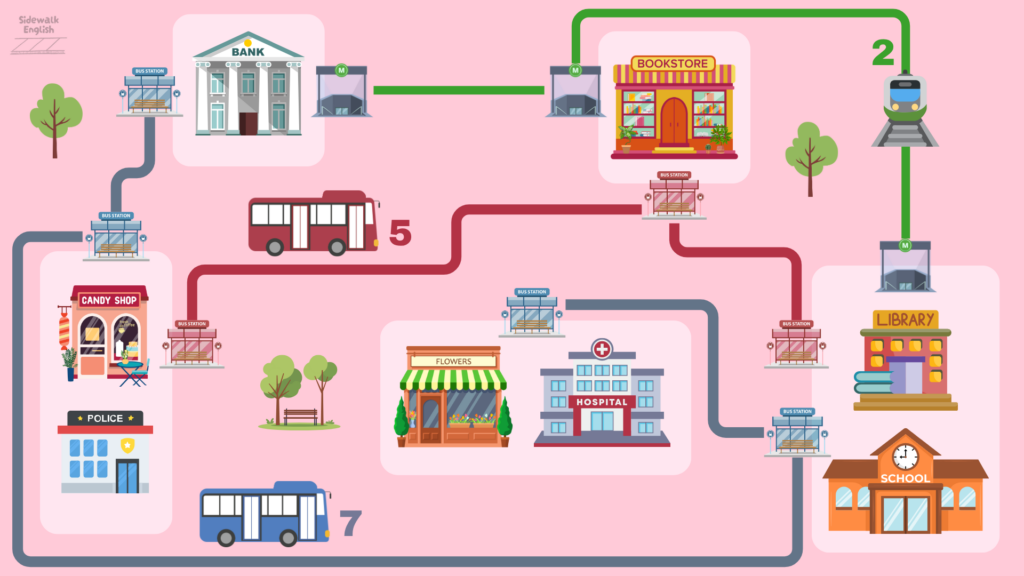
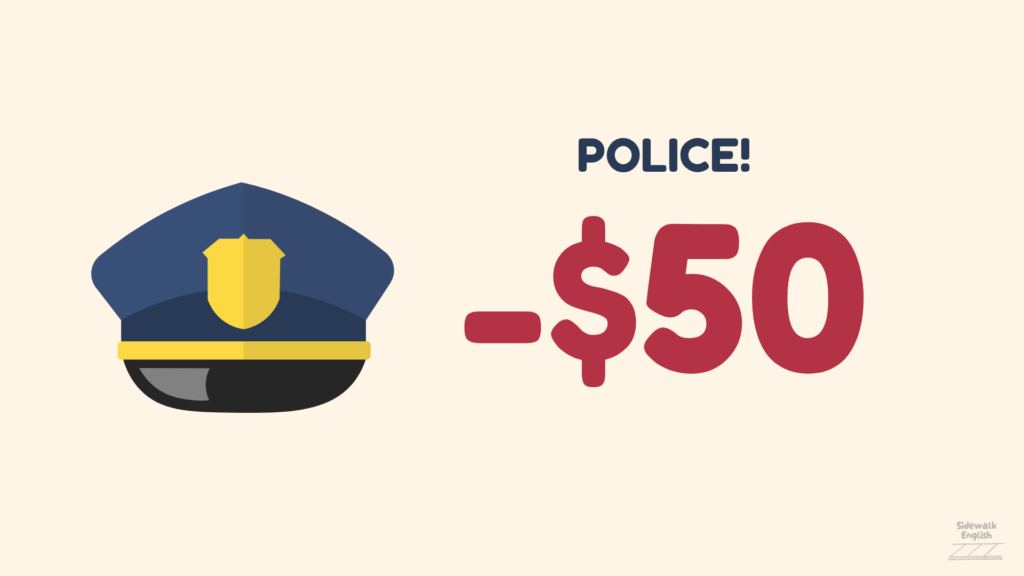
    Students choose a place to “rob” and give directions to get there. The teacher then clicks on the building to reveal either a cash reward or a fine from the police!

    I wanted to make sure the transportation methods were very clear (subway or bus) and that students are not confused about how to use the target language.

    My students do better when given a structure to follow, so I made sure that with this game, they are able to practice using the same key expressions over and over again.

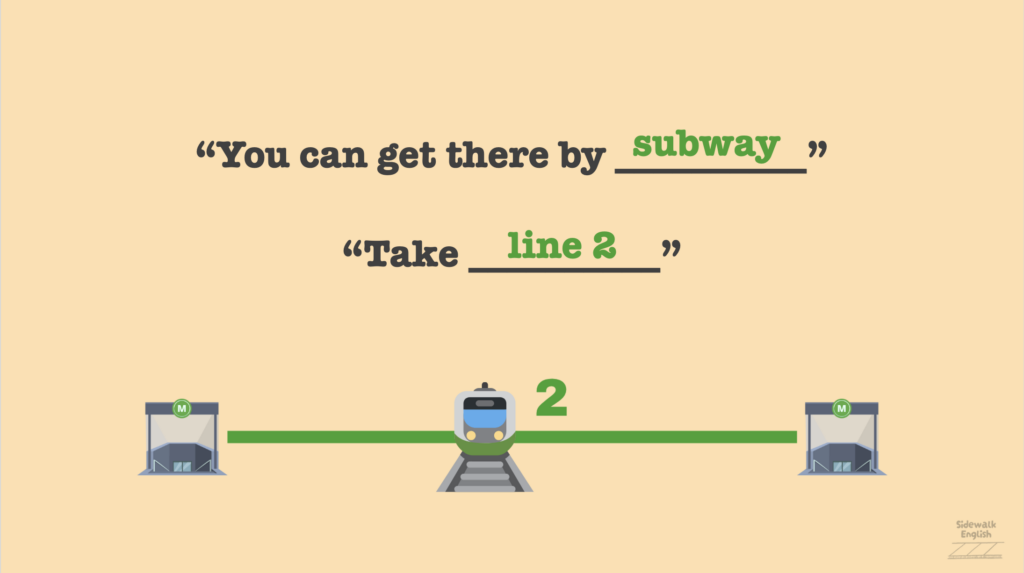
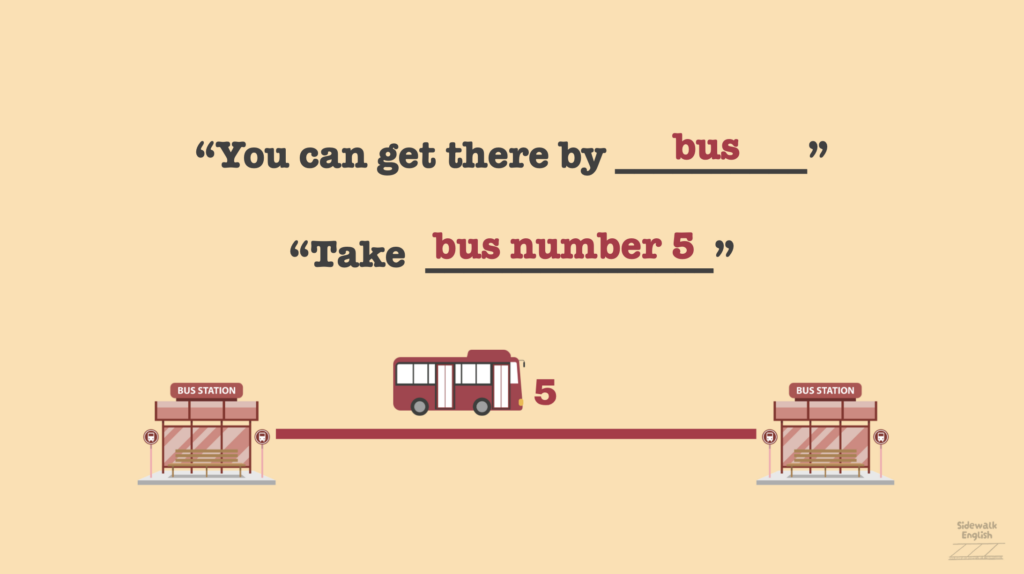
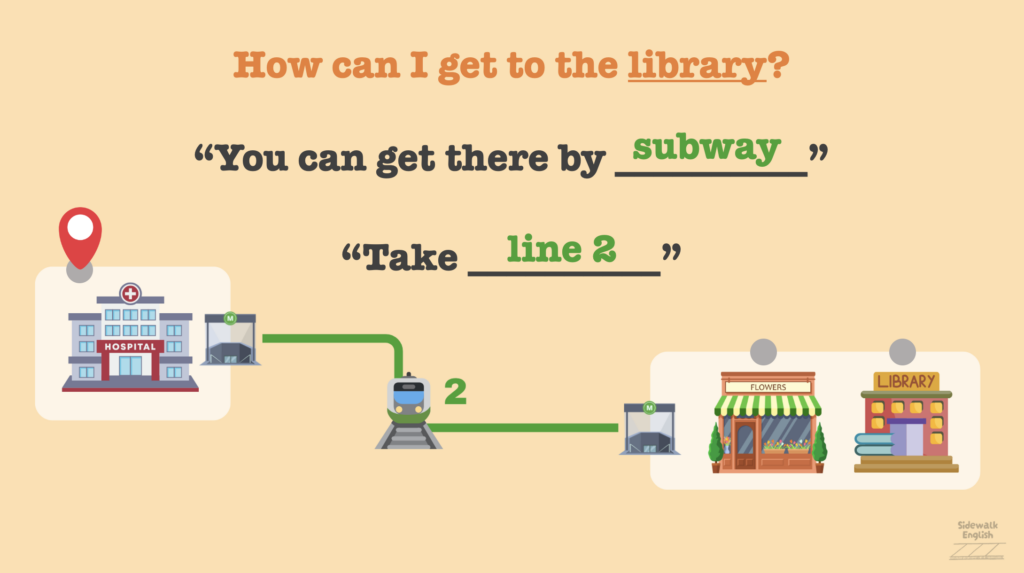
    For example, in the practice/explanation section of this PPT, I introduce sentences such as: “How can I get to the library?”, “You can get there by subway“, and “Take line 2.”

    You can also have students use prepositional phrases when explaining how to move to another location. For example: “You can get there by subway. Take line 2. It’s next to the bookstore.”
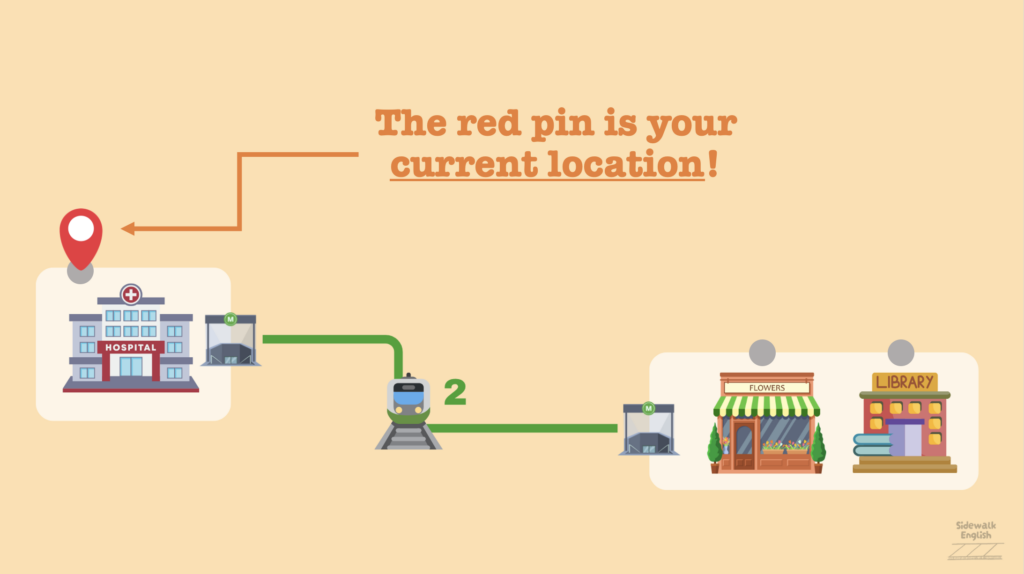
    You can move the red pin around the map to indicate your current location by clicking on one of the gray circles at each location on the map. This way, students are able to practice giving directions from any point on the map to any other point without getting confused about where they are.

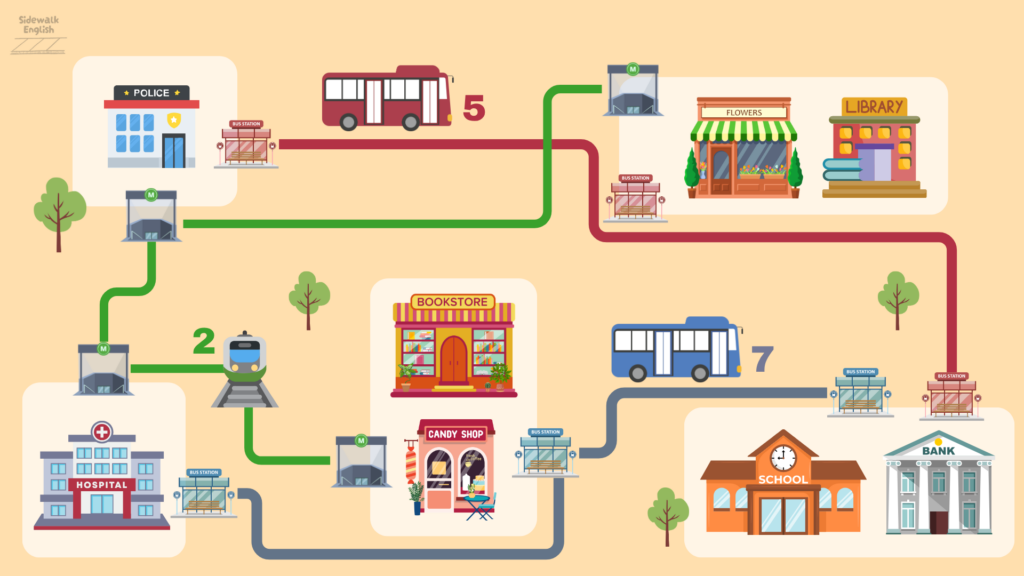
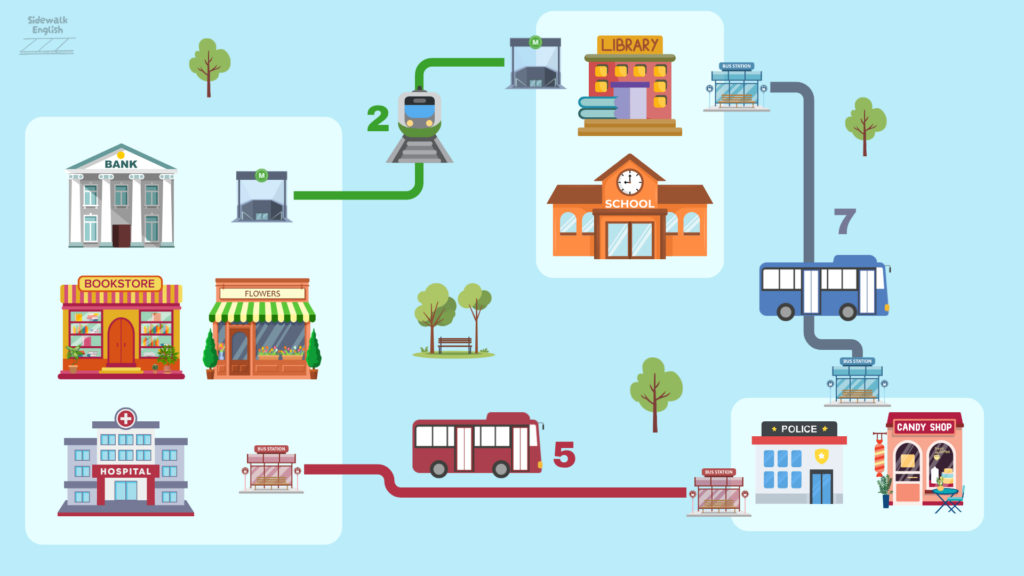
    There are 4 maps with 8 locations each, so there will be 32 total chances to practice speaking if each student chooses a location one by one. Once all the locations on one map have been visited and closed, you can “skip town” and go to the next map.
    You can download the full PPT game below.
  • Pyramid Puzzle I Went On A Trip Worksheet

    Pyramid Puzzle I Went On A Trip Worksheet

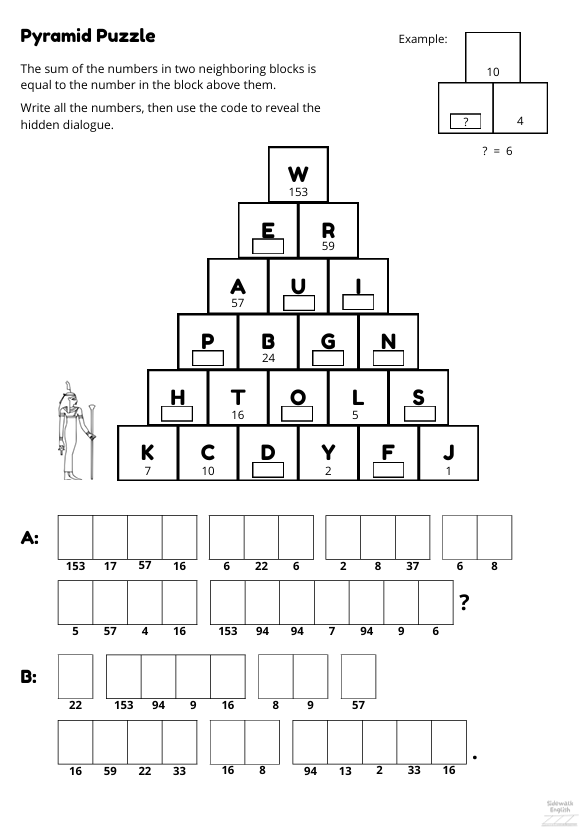
    This EFL/ESL worksheet is a “pyramid puzzle” where students must use simple arithmetic to complete a cipher that will reveal an English conversation. This worksheet targets the key expressions “What did you do” and “I went on a trip,” so it works for lessons related to past tense verbs and talking about the past.

    The back page is a just a simple maze to keep students busy for a little longer in case they finish early.

    It’s double-sided on A4 paper, so make sure when you print, it’s set to two-sided, flip on the long edge! Or you can choose not to include the back page.

    You can download students versions with either English or Korean instructions and the answer sheet below.

    Student Version (English):

    Student Version (Korean translation):

    Answer Key:


    You can find related worksheets here:

  • Directions Battle Ninjas Activity Sheet

    Directions Battle Ninjas Activity Sheet

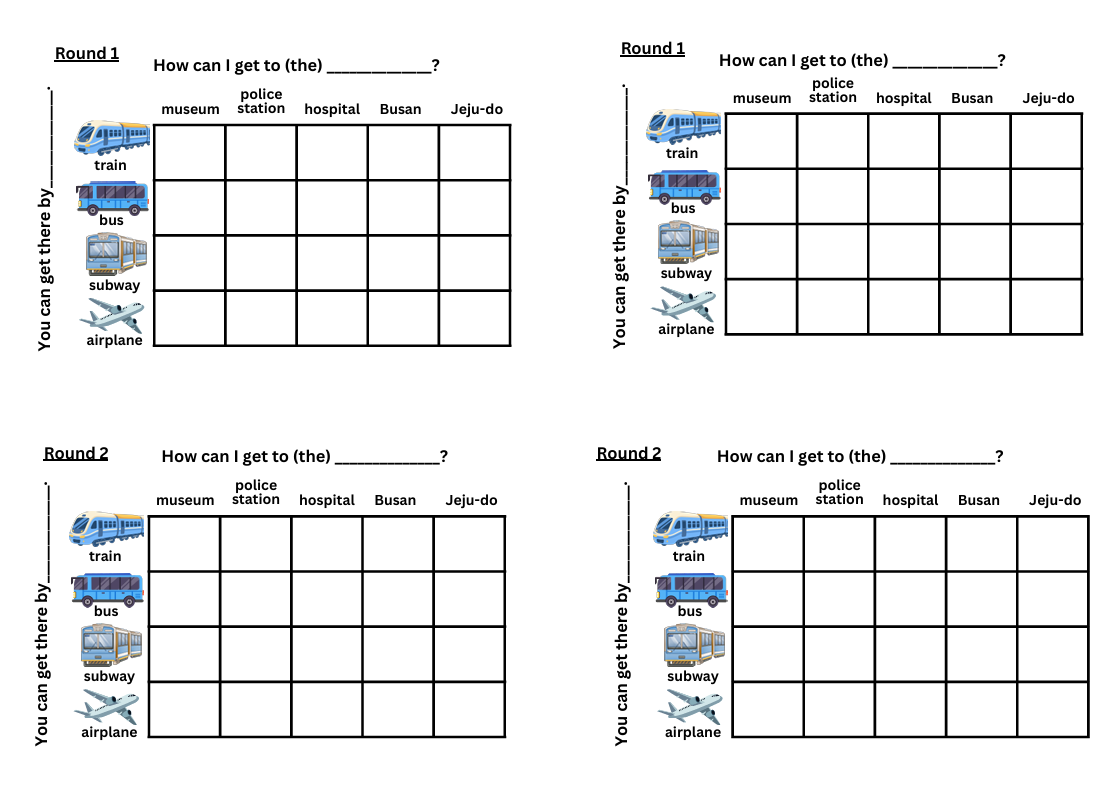
    Here’s an activity sheet for the ESL/EFL game Battle Ninjas but with a different topic: asking and giving for directions, modes of transportation, and locations.  

    It is designed to be printed doubled sided on A4 paper and cut into quarters, so you can play 2 rounds while saving as much paper as possible. Make sure when you print, it’s set to two-sided, flip on the long edge!

    Download the Instructions PPT and read about how I play this game in my other post: Battle Ninjas Speaking Game PPT and Worksheet.

    Here’s the PDF version of the acitvity sheet:

    You can also download it as a pptx file if you want to edit this version yourself:

    This activity aligns with the YBM (Kim) Grade 6 curriculum, lesson 7 “How Can I Get to the Police Station?”(교통수단/위치).

  • What Did You Do? Past Tense Verbs EFL Worksheet for Korean Speakers

    What Did You Do? Past Tense Verbs EFL Worksheet for Korean Speakers

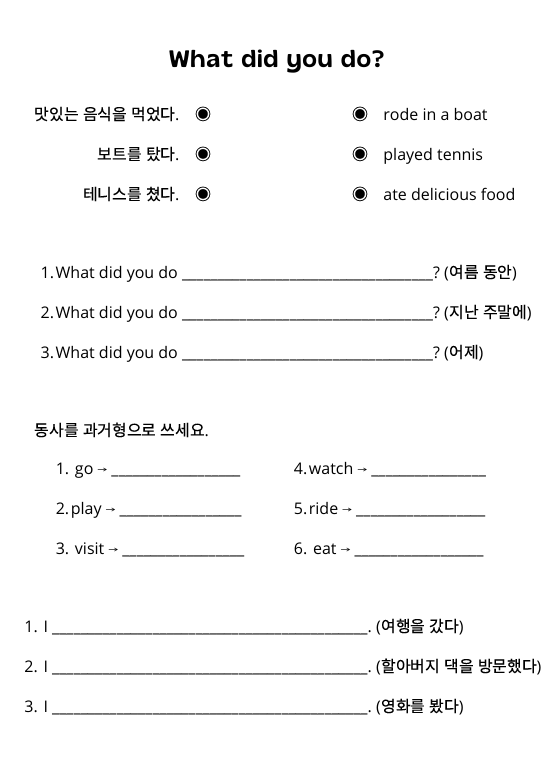
    This is a worksheet targeting English words and phrases in the past tense, specifically for Korean speakers as it relies on using Korean translations.

    This sheet aligns with the YBM elementary grade 5 curriculum, lesson 7 “I Went on a Trip,” and targets key words and phrases from this lesson.

    The first section is matching English phrases with their corresponding Korean translations. In the second section, students must complete the question in English based on the Korean translation provided.

    The third part focuses on converting present tense English verbs to past tense, which is the most important section for my students because sometimes they will memorize phrases without understanding when a verb is in past or present tense.

    In the last section, similarly to the second section, students must complete the sentence in English based on the Korean translation provided.

    This worksheet is designed as a half sheet on A4 paper, so you will need to cut the pages in half. The student version and answer key is below.

    Student Version:

    Answer Key:

    I like to pair this sheet with my other lesson 7 sheet: Nature Word Search. Here is a version of the PDF with both sheets together, so you can print it double-sided and cut in half for a longer activity.

    You can find related worksheets here:

  • Nature Word Search Worksheet

    Nature Word Search Worksheet

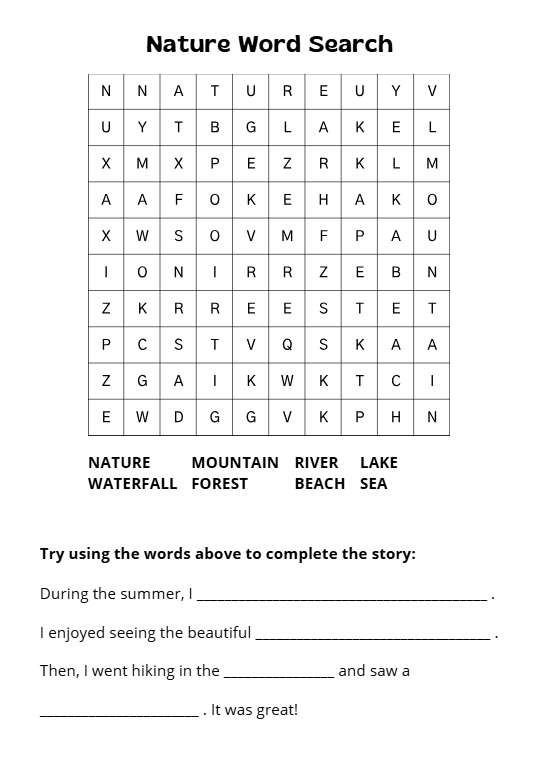
    This is a word search that targets nature-related vocabulary such as mountain, beach, forest, waterfall, river, lake, sea. There is also a writing practice exercise to practice finishing sentences with past tense verb forms.

    There is a version for Korean speaking learners and an English only version, but they are slightly different!

    This worksheet aligns with the YBM elementary grade 5 curriculum, lesson 7 “I Went on a Trip.” The version for Korean speakers has Korean vocabulary translations and a fill in the blank exercise that specifically targets phrases used in this lesson.

    The English only version does not include any translations, and the bottom writing practice section is more open ended, inviting students to try finishing the sentences using the target vocabulary words from the word search. This version is a bit more challenging, so would be better suited for slightly more advanced English learners.

    This worksheet is designed as a half page on A4 paper, so you will need to cut the pages in half. The Korean and English only student versions and answer key for both are below.

    Student Version (Korean translations):

    Student Version (English only):

    Answer Key:

    I like to pair this sheet with my other lesson 7 sheet: What Did You Do? Worksheet. Here is a version of the PDF with both sheets together, so you can print it double-sided and cut in half for a longer activity.

    You can find related worksheets here:

  • Colors Spelling Coloring Sheet

    Colors Spelling Coloring Sheet

    This is a coloring sheet to teach EFL/ESL English students how to spell color names! Great for when you have some extra time to fill or have students of lower ability who may need an easier task to focus on.

    It is designed as a half sheet on A4 paper, so you’ll have to cut the pages in half.

    You can find related materials here:

  • Time Bingo Activity

    Time Bingo Activity

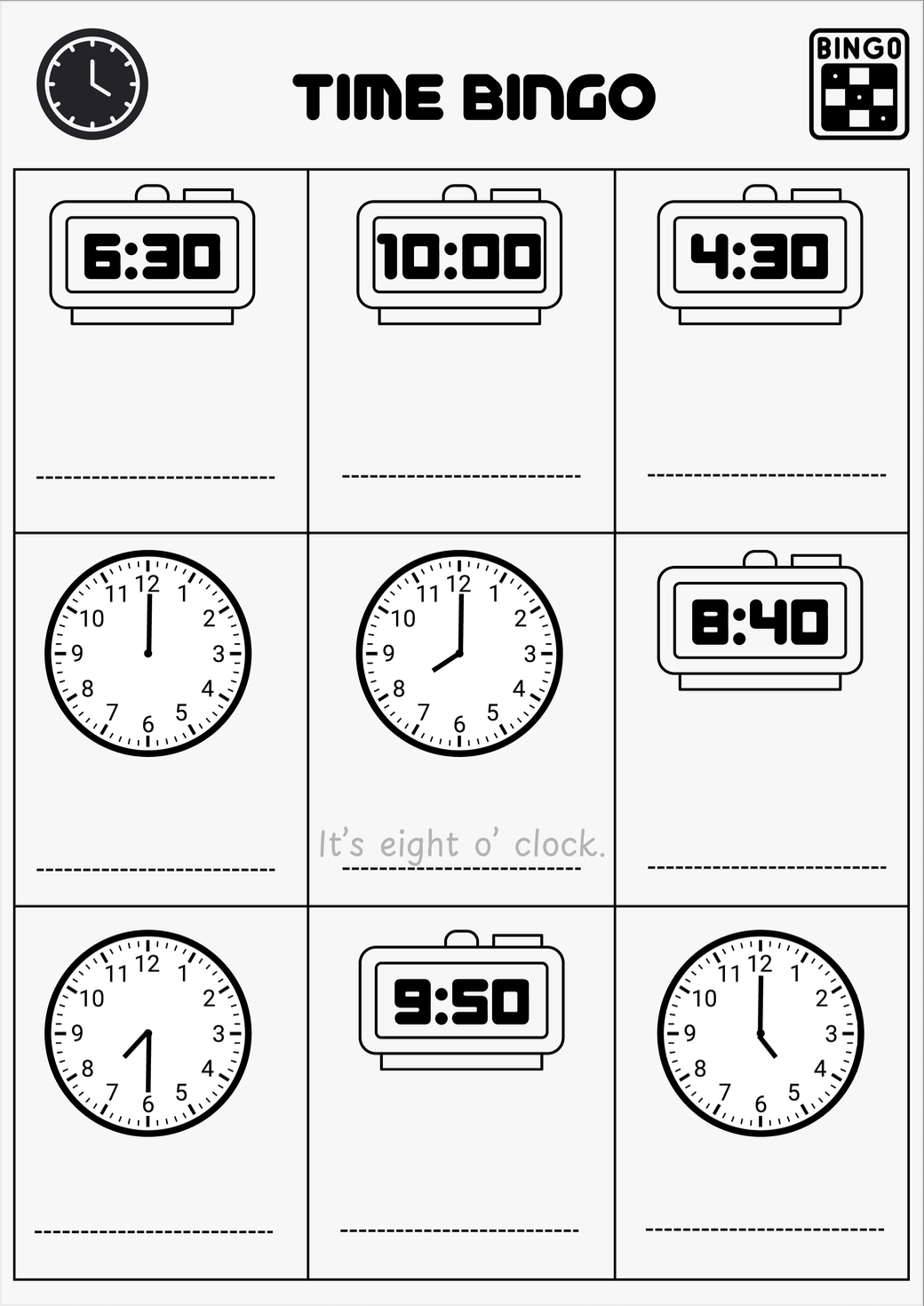
    I played this Time Bingo game with 4th graders for a lesson teaching about time. It’s great for teaching any lesson about telling time, so I imagine this activity can be used for any ESL/EFL/ELA lesson or even in elementary school lessons about clock math.

    There are 25 unique bingo sheets. Students must write the time in English words under each time. The teacher can call out times randomly until students get 3 in a row (to extend play time, you can require students to get 2-3 bingos to win). My class of 25 students played for about 15-20 minutes.


    You can find related worksheets here: