Category: Life in Korea

  • A Few Pet Peeves About Life In Korea

    Truly there’s a lot I love about life in Korea, which is why I’m still here, but sometimes a girl just needs to complain.

    1. Why is the fruit so expensive?

    As someone who grew up in California with sunshine and fresh produce year-round, this is a form of cruel and unusual punishment. Although I suppose there’s no Eighth Amendment here, so that’s a moot point.

    For those who may not know, the Eighth Amendment in the U.S. constitution protects against “cruel and unusual punishment.”

    2. Summer. Everything about summer.

    I have always been a winter kind of person. And summers out here are even more brutal than NYC, not to mention California.

    The mosquitos are SO huge and SO aggressive! The humidity is CONSTANT! And the mold is next level. I’m extremely careful, so luckily I haven’t had to deal with that last one, but I know mold is a recurring problem here. When I go shopping, I see so many contraptions and products for combatting mold that I never even knew existed. Speaking of, I have to buy more of those soon…

    3. 본인 인증

    This is the stuff of nightmares. WHY IS IT EVERYWHERE?

    본인 인증 is the identity verification process that you have to go through to do anything you need to live in this country.

    Instances where you will see these haunted 2 words: signing up for any online membership, registering transportation cards, registering for anything at all, anything to do with banking, anything to do with shopping online, government services, healthcare, ordering food, buying tickets for anything, it goes on and on and on and on and on.

    Honestly, this inconvenience alone makes me miss home frequently, especially since there are times when the whole system simply just fails, and I have to start over multiple times for it to finally work.

    Also with banking, one time I went through it like 3 times only to discover that the particular service I was trying to access is not available for foreign residents online. I took PTO to go to the bank and resolve this because for some inexplicable reason (I have researched the reasons and I’m still mad), the bank closes at 4pm and does not open on weekends at all. Please, have mercy!

    This leads me to my next point:

    4. Website design (and general access to some services)

    I really don’t know what it is, considering that Korea is now at the global forefront of digital media, entertainment, and technological innovation, but why are so many websites so difficult to use?

    Is it just me?? So many websites have very, very strange UX/UI design choices. I’m sorry this is a hard one to explain concretely, but it’s something I’ve felt over time here. If you have lived in both the U.S. and Korea and dealt with a lot of traveling, banking, and basic life stuff of this nature, you might get it. Otherwise, you’ll just have to trust me.

    I can give you this one concrete example. My parents called me to help them book a popular ferry trip from Jeju Island to Mokpo. They had tried through various methods to book it themselves, but there are simply too many roadblocks for foreigners.

    For a lot of services, you must have a Korean phone number, Korean bank account, and/or Korean government ID number. This includes things like ordering food for delivery, getting discounted tickets (sometimes I find prices are cheaper on the Korean site than the site for foreigners), or in this case, booking a cruise that is marketed to tourists (???). I’ve heard some foreigners had to ask a random hotel employee to book it for them last minute.

    To book the ferry, I went to the website linked here. On first glance, the site isn’t the worst I’ve seen. I switched to English to help me navigate better, and the reserve (예약) button didn’t work. I was like… wut… It just became a dud??

    I laugh in disbelief every time I think about it. In the end, I completed the whole process entirely in Korean because on the English version of the site, the button to reserve the ticket simply wasn’t functional. But like I said, weird random issues like this are not uncommon with Korean websites whether I am navigating in Korean or English, so I wasn’t even surprised. Hopefully this story clarifies the point I’m trying to make about accessibility.

    5. Crosswalks

    I don’t know, I can’t really complain about this one too much because this probably happens in a lot places around the world, but I still want to, so I will!

    Why are some of the crosswalks SO big and the wait times SO long? The crosswalks near my house on my commute to work have a 90 second wait time. There is a timer that counts down, so I can watch while the seconds painfully tick by as I stand in the brutal blazing summer heat. As I mentioned in my post Why I Love Going to Work Early, those nearly 2 minutes can make a huge difference for me, so you can understand my frustration.

    Another thing! At one of 2 large intersections I must cross daily during my epic sojourn to work each morning, there are only 3 crosswalks instead of the usual 4. You can see how I have so elegantly indicated this with a hastily Googled stock image and some quick work in Apple Preview (stellar design software). Observe:
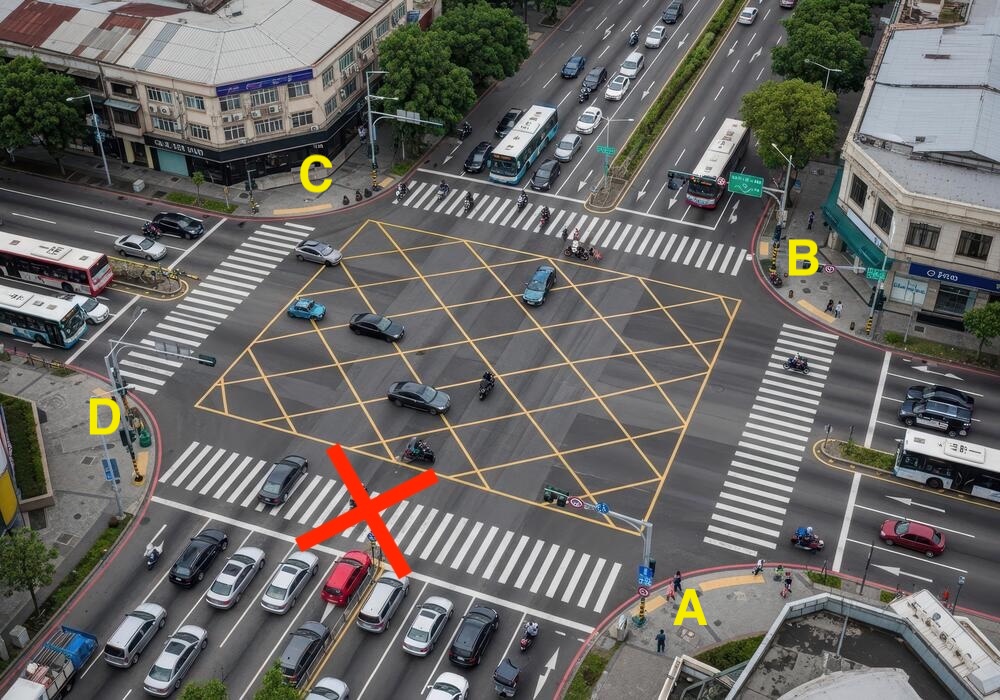
    If I am at corner A and I have to go kitty corner (a.k.a get to corner C), there is a higher chance that I must wait for the full 90 seconds twice. Bear with me:

    Let’s say I’m at A and I miss the first crosswalk to go straight to B. I can’t simply cross left to D. No, I have to stand there and mournfully watch the people on the other side of the intersection crossing from B to C, imagining them mocking me as they freely make progress toward their individual destinations. After 90 agonizing seconds, I can finally cross to B. Then I must wait another 90 to cross left to my ultimate goal C.

    But! If there had been a crosswalk between A and D as is the norm, it would have halved my waiting time.

    Yes, I did create a visual aid and explain this whole situation as if setting the stage for some complex geometry problem.

    I am that peeved.


    I actually have a few more points to make, but I’m not trying to write an anti-Korea manifesto, and I feel fully satisfied after writing that last crosswalk rant there, so I’ll put a pin in it for now. Stay tuned for Part 2, which will probably be written the next time some random small inconvenience gets stuck on my mind.

    Love,

    B.
  • Why I Love Going to Work Early

    I teach English at a public elementary school in Seoul, South Korea as an EPIK teacher. I’m always in the best mood ever when I’m at least 20 minutes early for work.

    First of all, the buses are more frequent earlier in the morning. I don’t know why, but a few minutes makes a huge difference here. If I’m running 5 minutes late (and for me, late is actually still early and really late is on time), it might take me 10 extra minutes to get to work that day. That’s my whole coffee routine gone!

    More importantly, if I go early, there are no children. Most of the kids arrive at school a bit later, and the screaming and stampeding the halls follows soon after. The loud footsteps, shouting, and sometimes banging into my office door during break times can be a bit stressful.

    I start teaching at 9, so I try to be at my desk drinking my coffee by 8:15. It’s so blissfully quiet at 8 in the morning. The school is still empty, except for a few groundskeepers, maintenance staff, and some other teachers who also come in a little early.

    Sometimes some of the school staff stop and bow to me, which makes me feel a weird a mix of surprise, satisfaction, and awkwardness. On one hand, I’m happy to be accepted as part of the community especially as a foreigner. On the other, this respect feels misplaced coming from someone much older than me who doesn’t know anything about me. I’m just a young, lowly English teacher…

    In the summers, it’s humid, so the school hallways are warm and smell like rain. In the winters, it’s frigid cold, but there’s still that unmistakable school smell I can’t quite place. Maybe it’s just the smell of old, dusty buildings. The school was built in 1985. It looks a lot like every other public school in Seoul, following a standardized multi-story concrete design that was popular in the 1980’s due to the rapid population growth of the city. It’s a bit sad now, because there are fewer children every year and the school building is slightly too big for the number of students and staff.

    But this is lucky for me, because I get a large office to myself that was designed to be shared with about 6 other people. I look forward to sitting in this office every morning. I have AC, a microwave, a refrigerator, a Nespresso machine, a printer, paper cutter, closet, and shelves and shelves of English books and games pretty much all to myself.

    Maybe all I’ve really learned about myself from this job is that I love having a private office, but who doesn’t? I have a feeling that this is a luxury I won’t have again for a long time during the rest of my career, but I’m really enjoying it while I have it.

    The school building is being maintained and even slowly modernized, but there seem to be frequent electrical issues or other random maintenance problems. The government pours money into education, so the kids enjoy a lot of modern technology that I think most elementary school kids in America can only dream of. Every student has their own personal school-issued tablet, every classroom has an interactive touchscreen whiteboard, and the gym has an AR rock climbing wall with projection mapping for interactive climbing games.

    Still, some of the equipment and decor in this school looks like it’s gone untouched since the 80’s, and I feel like 80’s Korean equipment looks like something out of the 70’s in America. It gives the space a slightly vintage feel as I’m moving through different classrooms to teach, like we’re all still living in an era before Internet, a vibe that only adds to the affection I feel for my early mornings in the office. Everything slows down, and it feels like time itself has turned backwards.


    I’m looking out the window of my office. It’s summery and sunny outside. I can see the mountains in the distance, and the cluster of copy-paste white high rise apartment buildings tucked into the hill looks like a quaint medieval castle if I don’t look too hard.

    The kids file in slowly around 8:40. The noise outside swells at 8:45 and dies down at 8:50 as the students settle into their homerooms. When I hear the sound of running footsteps past my door, I know someone left home late and is rushing to get to class on time, which means I also only have a couple of minutes before class starts. Time to go!

    Love,

    B.

  • WHERE IS MY SPAGHETTI

    Hello friends,

    Welcome to my rant about spaghetti in Korea.

    There is no spaghetti in Korea.

    Okay, I lied. There definitely is spaghetti here, but it’s just different.

    Korean Pasta is Korean Pasta

    You can get Koreanized pasta, which is usually extra creamy or adapted for Korean cuisine by adding 명란 (pollack roe) or 깻잎 (perilla leaf) or some similar Korean twist. I don’t mind that because it’s clear what it is. Korean pasta is Korean pasta, the same way Korean pizza is Korean pizza.

    But the spaghetti. All I want is some simple, no-frills, hearty, American spaghetti and meatballs.

    What is Tomato Spaghetti?

    The spaghetti served at the school cafeteria tastes fine, but it’s just not spaghetti as I know it. Sometimes it has broccoli or shrimp in it. The sauce is really watery and it’s a plain tomato sauce. There is no other flavor there except tomato. Hence the Korean name, 토마토 스파게티 (tomato spaghetti).

    If you’re looking for something resembling spaghetti marinara, there’s only 토마토 스파게티 (tomato spaghetti) in Korea as far as I can tell. Or you can try finding a good Italian-style restaurant and get some lovely pasta that tastes delicious. It will have huge depth of flavor, with roasted garlic and pepper. If you’re really lucky, it might even be served with some fresh Parmesan cheese. A lot of good pasta places here are actually brunch restaurants.

    But this is still not American spaghetti. It’s fancy and on the pricier side. It’s served on a pretty plate in a nicely designed restaurant focused on branding and atmosphere. Couples go there because it’s a nice, upscale date spot.

    I don’t want nice, pretty, fancy food. I want rustic, cheap, homey, comfort food. I want the most unpretentious, unimpressive, uncomplicated plate of plain American spaghetti. Like you’d get at someone’s home or in a diner.

    Why is American spaghetti different…

    I’ve been thinking about why I feel American style spaghetti tastes different. I never even realized it was different.

    The sauce is richer and meatier. It’s cooked with beef and onions. It’s thick and hearty, almost like a stew. It has Italian spices in it. Also Parmesan cheese exists in the U.S. It’s much harder to come by in Korea.

    It’s irrational that this bothers me so much because I very rarely eat pasta, whether in the U.S. or Korea. When I was in America, I really didn’t eat spaghetti that often. It’s not like it was a favorite food of mine. But now it’s completely inaccessible.

    I even bought the ingredients at a store here and made it at home. First of all, this is not a budget meal in Seoul the way it was in NYC, and I went out of my way to get to a store that supplied Western ingredients. Secondly, my kitchen is tiny so maybe I wasn’t able to cook it as well as I would have back home. Third, all I could find was a Parmesan cheese blend that tasted quite a bit different from Kraft Parmesan, and I wasn’t able to find fresh Parmesan at all.

    But the biggest problem for me was that there was no ground beef or meatballs. Maybe I could find some ground beef if I looked a little harder, but I really wanted meatballs. I even checked Coupang, which has everything. No luck.

    So unfortunately, even trying to cook spaghetti at home did not satisfy my craving. My craving isn’t entirely about flavor. It’s also about the setting and the price and the convenience.

    Burger King???

    In New York, if I wanted cheap, mediocre diner food, I could get it at any time of day. I could get pancakes or spaghetti or buttered toast. It would be cheap and fast and uncomplicated.

    Now the only Western food is either really nice Western food, or big chains like McDonald’s and Burger King. And a side of buttered toast at a brunch restaurant is not that cheap because it seems like butter is more of a luxury here and bread is not as common.

    Also someone explain to me why Burger King is so popular here?? There’s a Burger King in like every neighborhood. Apparently, the geographic density of Burger King locations in Seoul is massively higher than in any major American city.

    The best American diner in Seoul

    Luckily, even if I’ve given up hope on spaghetti, there is a pretty good American breakfast diner in Seoul!

    Travel Maker in Hongdae hits the spot every time. They don’t have corned beef hash or omelettes, but they have some basic American diner breakfast menu items.

    The Obama Breakfast includes white toast and butter, scrambled eggs, two pork sausages, and hash browns.

    I wouldn’t say it’s entirely immersive, especially because of the random America themed paraphernalia on the walls that make it feel like a fan shrine of the U.S. It’s not 100% believable as an American diner, but it’s as close as you can get and the food tastes pretty good. I would definitely recommend it to anyone missing some simple American breakfast. It’s not fancy, but it tastes like home.

    There are also a few locations of The Original Pancake House in Seoul, but I’ve been told to avoid the one in Itaewon because the quality isn’t great. I’ve never tried The Original Pancake House back in the States, but it’s on my list to check out at some point.

    For now, I trust Travel Maker to be there when I need it. Although they still don’t have any spaghetti.

    Love,

    B.

  • A Day in Daejeon

    A Day in Daejeon

    Daejeon isn’t exactly the first city on the list of tourist destinations in Korea, but if you want to explore within Korea a little more and are wondering where to go, here’s my list!

    I recently spent a full Sunday exploring Daejeon with a friend who lives there. This was our itinerary for the day and my thoughts on everything. I also added the Naver Maps link for each place!


    11:00 AM — Sungsimdang (성심당 본점)

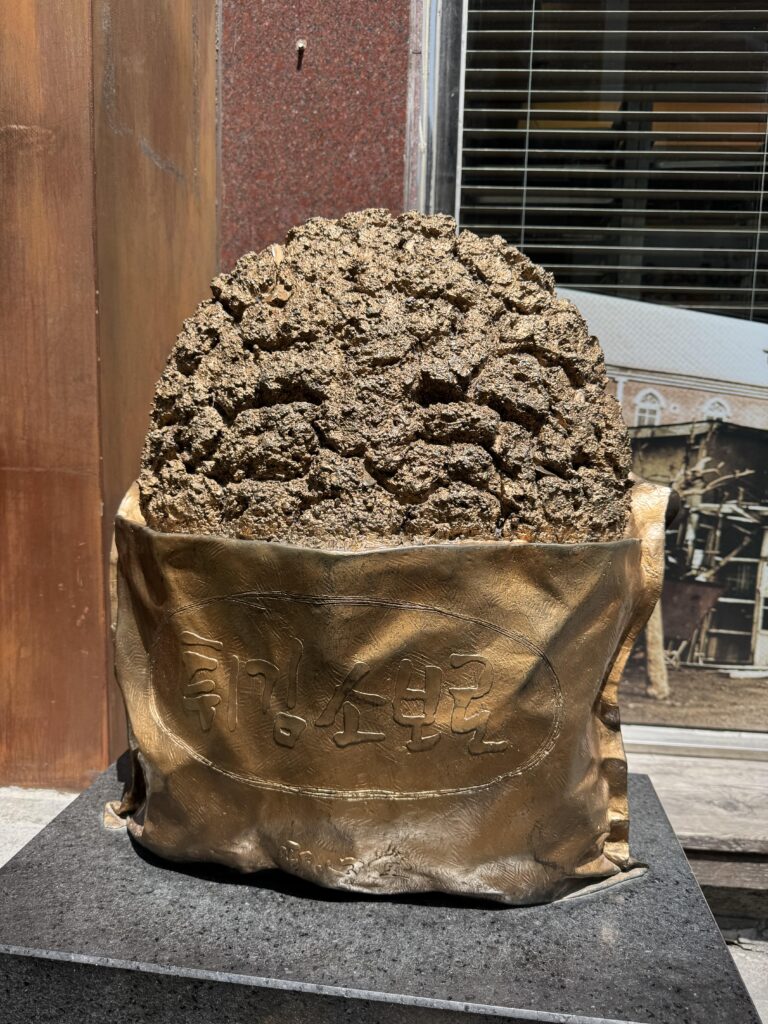
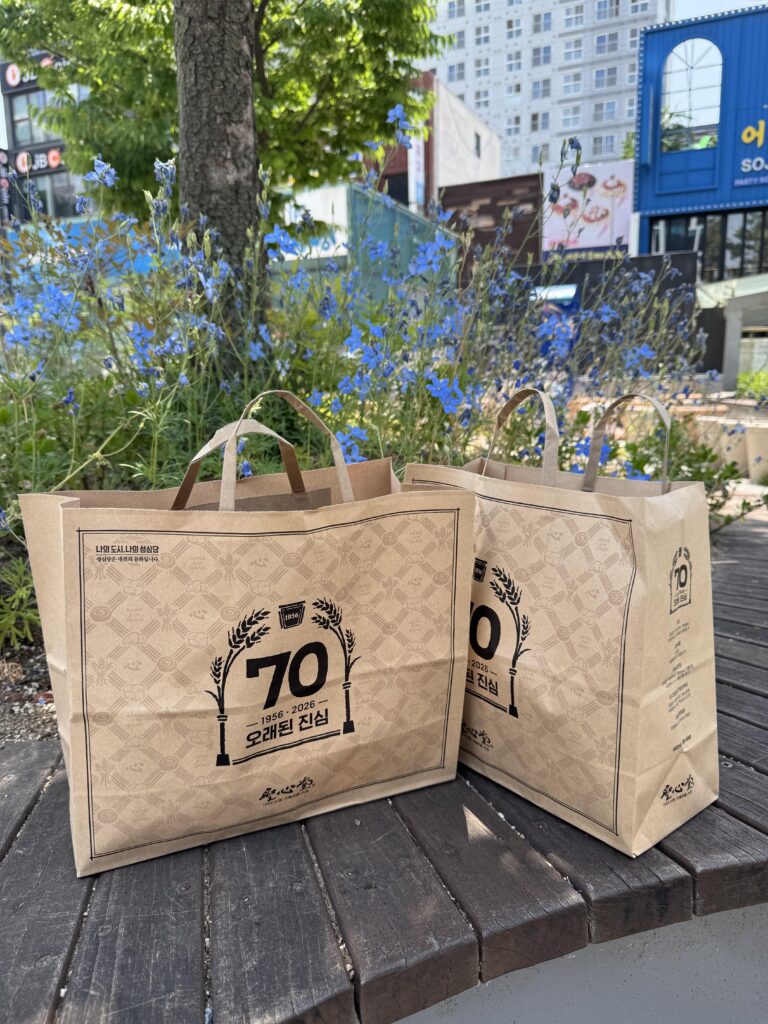
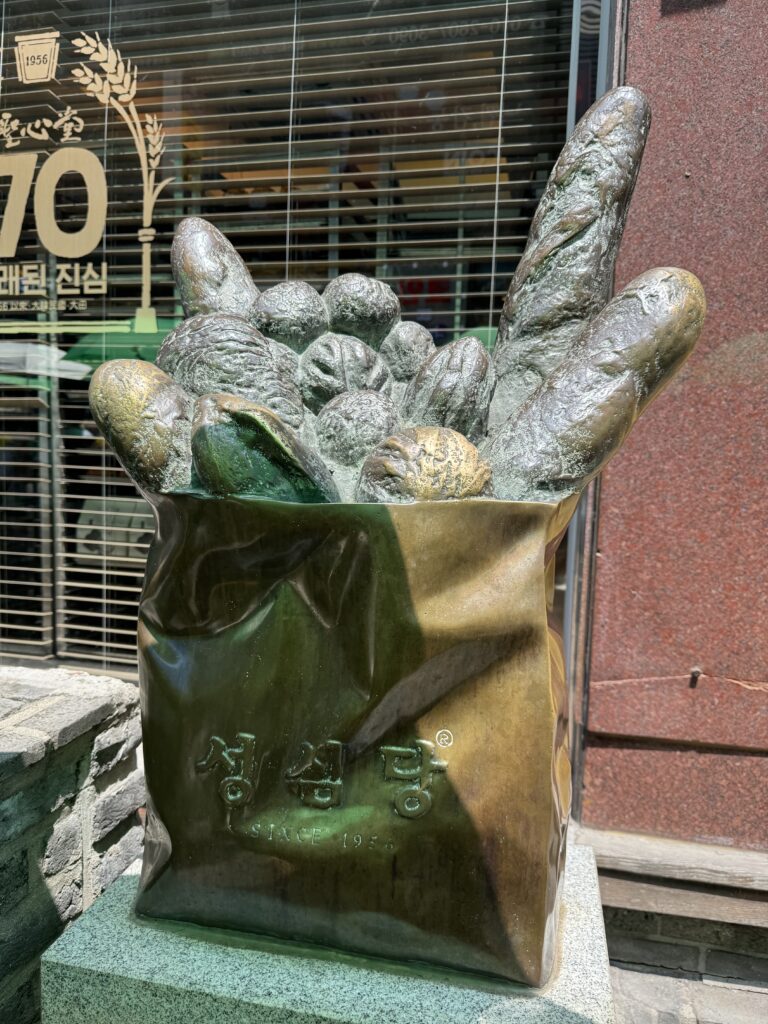
    This bakery is probably one of the only reasons anyone goes to Daejeon. It was founded in Daejeon in 1956 and is famous for its twigim soboro (튀김 소보로), a crispy fried sweet red bean bun. Sungsimdang has various flavors of soboro, including original, matcha, chocolate, and sweet potato.

    Ok at first I was thinking, I can’t believe people travel an hour or more to Daejeon to wait in an insanely long line just for bread, but actually going to this bakery was way more fun and less painless than I thought! We went in late morning on a Sunday, and even though the line was long, it moved quickly, so I don’t think we waited more than 15 minutes. They even provided branded umbrellas for guests waiting in the sun. Once inside, it was chaotic and crowded, and there were so, so many different types of unique breads, desserts, and pastries to choose from! Everything I got tasted really fresh and high quality.

    I don’t think I would go all the way to Daejeon again just for bread, but it was definitely a highlight. Highly recommend!

    12:00 AM — Danwe (단위)

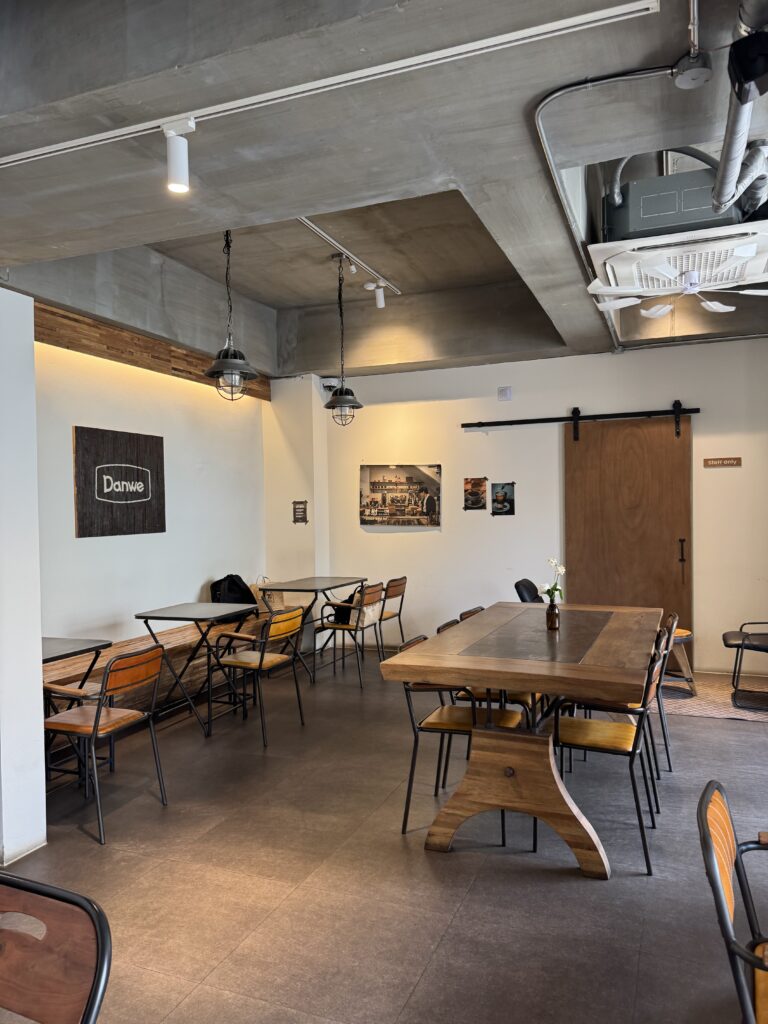
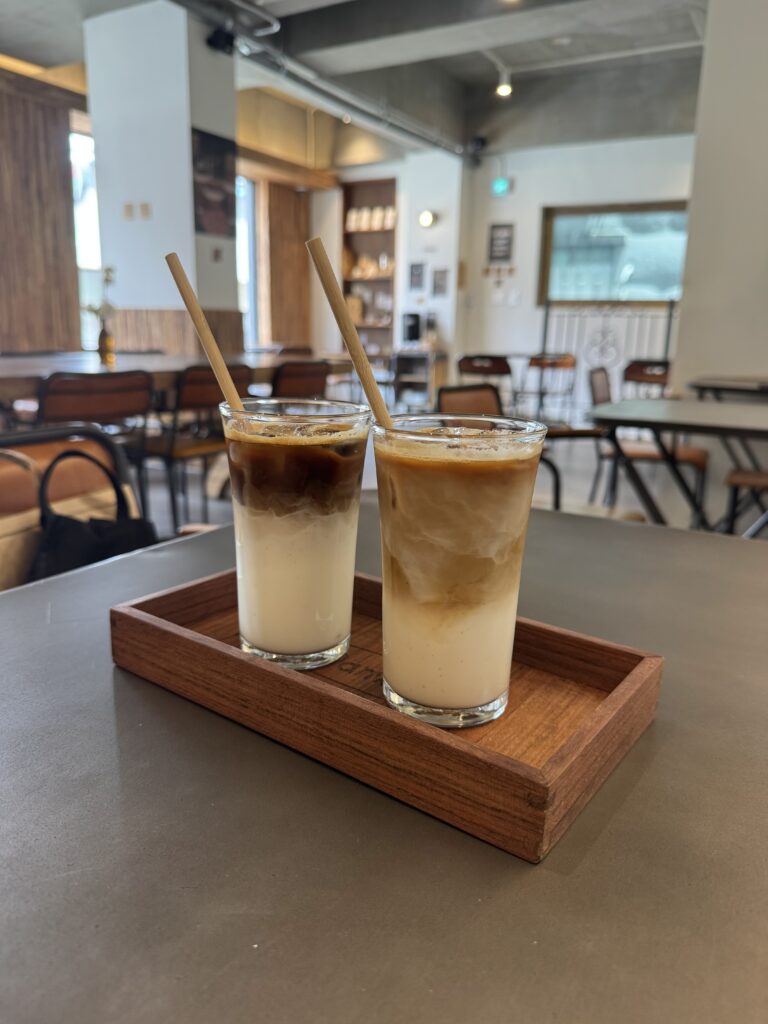
    This was a cute little cafe in the downtown area near Sungsimdang. The earl gray espresso latte was so delicious. It was a mix of coffee and earl gray flavor topped with a lightly sweet cream. Often in Korea, these drinks lack real flavor and are overly sweet, but as a coffee fanatic, I can confidently say this place will serve you a quality cup.

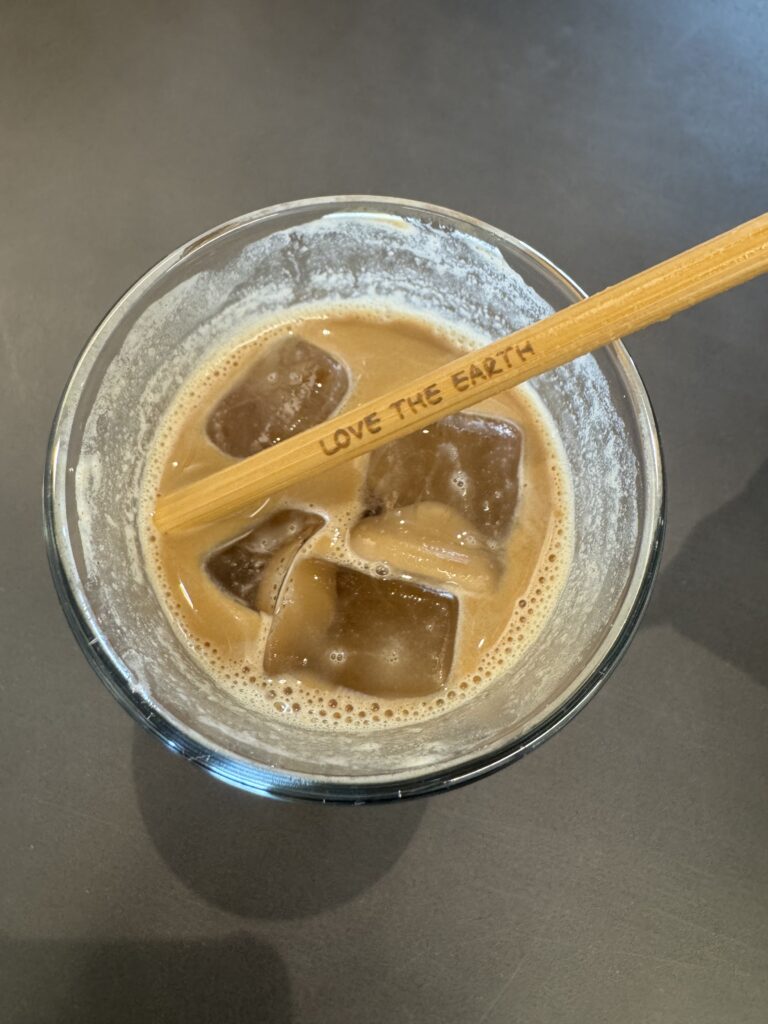
    Also the straws were made of hard wood instead of bamboo or paper, which I haven’t seen before!

    1:00 PM — Modern History Exhibition Hall (대전근현대사전시관)

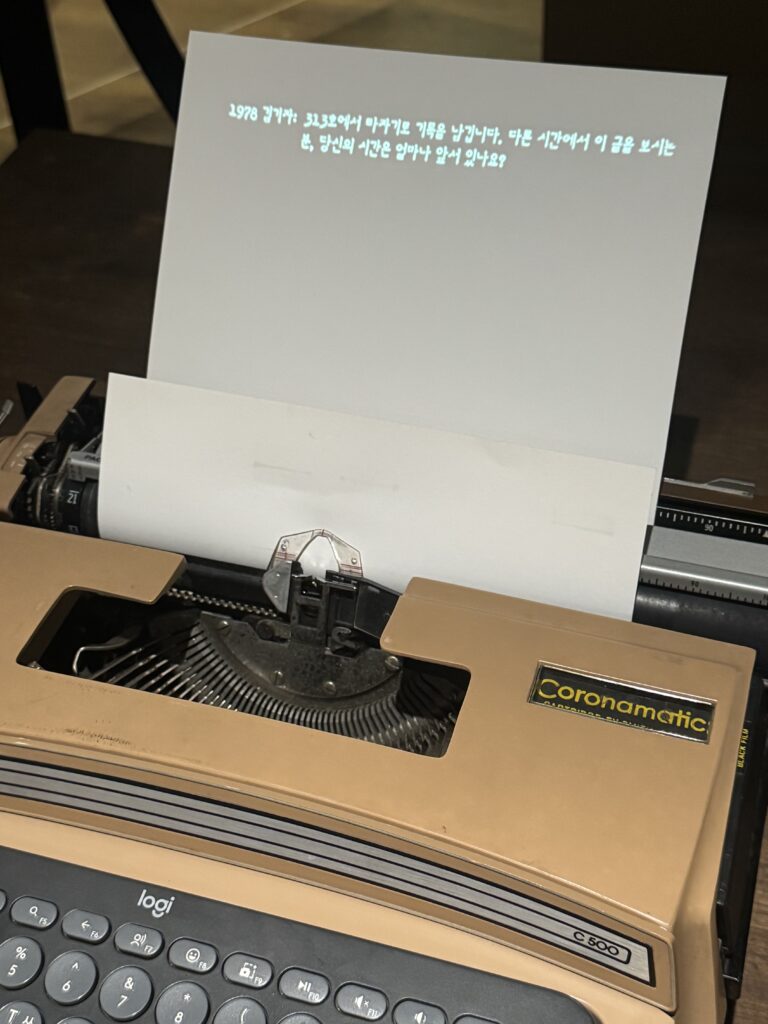
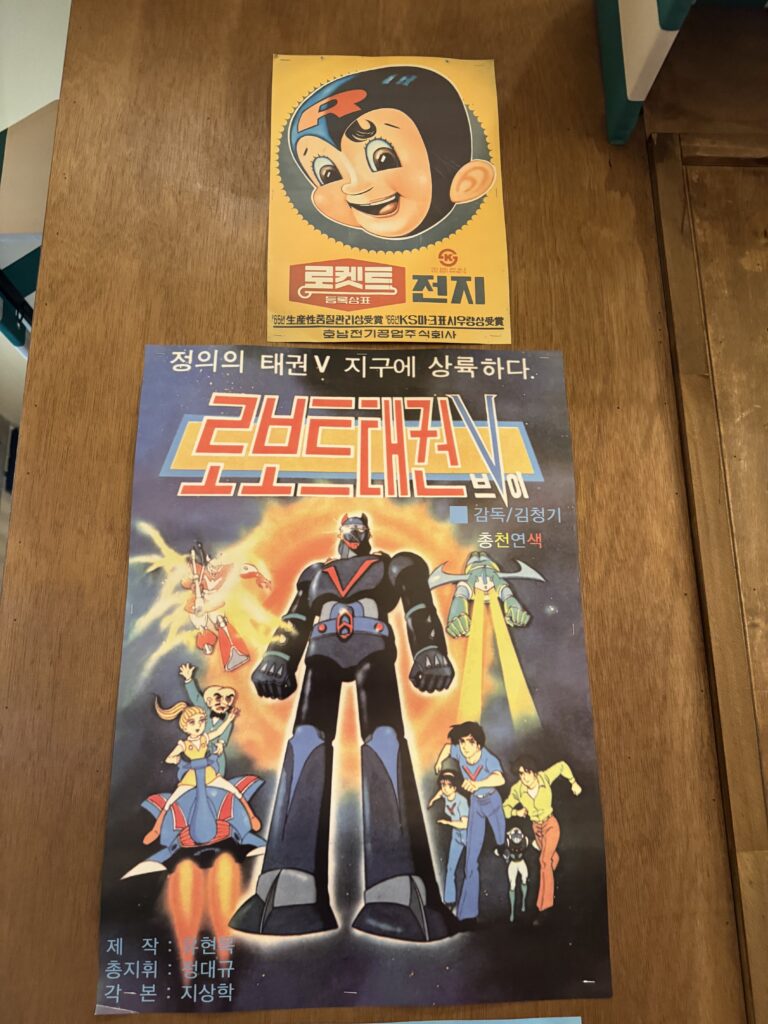
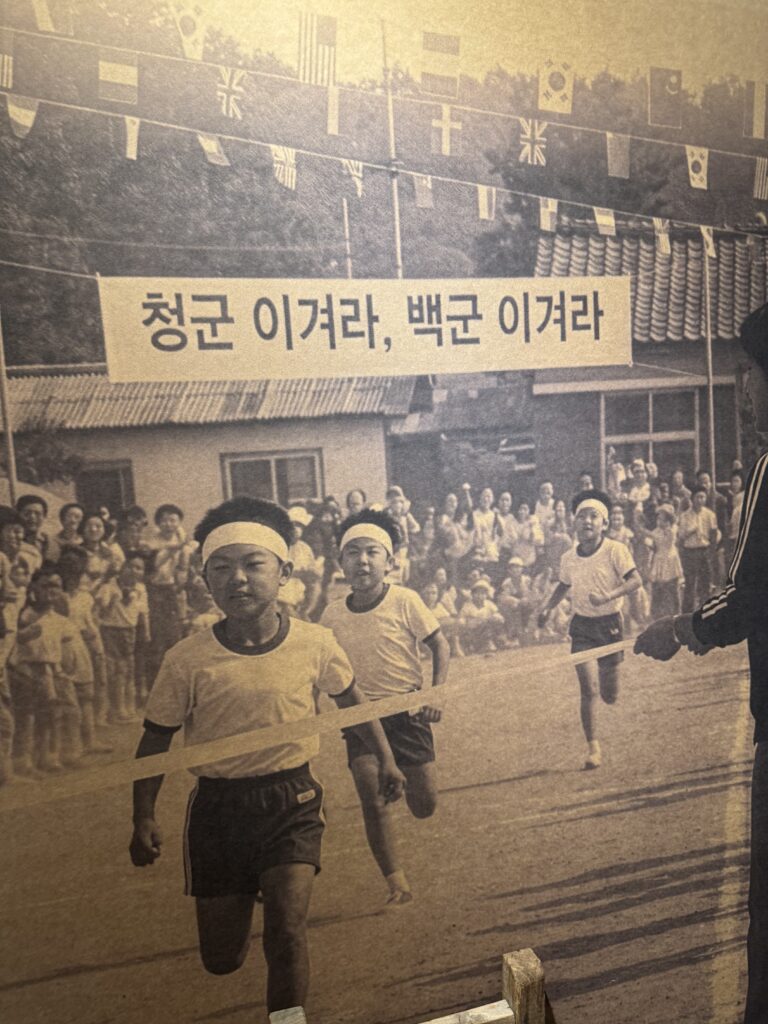
    Next was the Modern History Exhibition Hall, which is a museum about post-modern history in Daejeon. It’s really interesting because Daejeon underwent massive changes during this time period. It was completely free to enter and featured recreations of different rooms in Daejeon in the 70s through the 90’s, including a hotel room, and a bath house, and a toy store. The hotel room had a typewriter that allowed you to talk to a resident of the room “from the past.” The bath house was interesting because these old fashioned bath houses do still exist in Korea and I’ve even been to one, but they are rapidly disappearing in favor of more modern saunas. I loved the toy room and seeing what old toys were popular in Korea in the post-modern era. I recognized toys I had in my house in the early 2000s or that I had seen in my grandmother’s house as a child. It’s always really trippy to see something that you’ve experienced in your own life now displayed in a museum exhibition. I didn’t think I was quite so old.

    It didn’t take much time at all to walk through all the rooms here and there is very minimal English, but I think it is definitely worth stopping by to see. It’s a quick stop but really gives you a sense of how the city and Korean culture itself has changed rapidly in just a few short decades.

    2:30 PM — Yuseong Hot Springs (유성온천문화공원한방족욕장)

    This is a free outdoor foot bath that uses mineral water from the natural hot spring underground in the old Yuseong district of Daejeon. It’s perfect for a restful break in the middle of a long day of walking around. The footbath is outdoors in a little park space surrounded by benches and trees. You are expected to rinse your feet at the foot was before stting down to soak your feet in the warm spring water. The bottom of the pools are lined with stones that deep massage your feet as you walk around. Then after, you can rinse at the foot wash again and use a compressed air attachment to dry your feet quickly. It was so incredibly refreshing and restorative, and super casual and easy. Another popular Daejeon highlight.

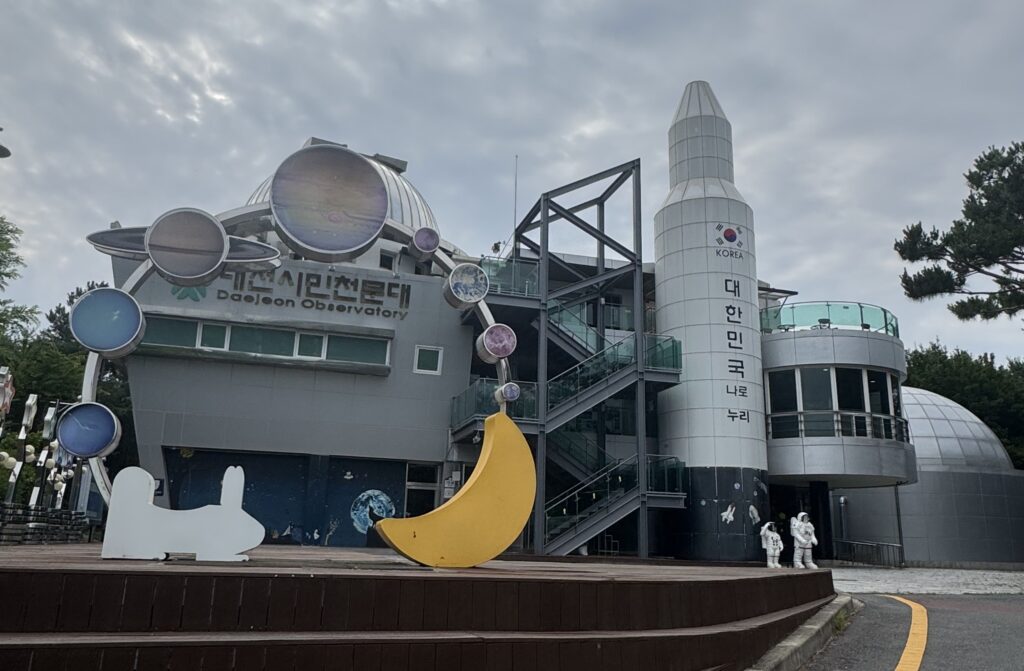
    4:30 PM — Daejeon Observatory (대전시민천문대)

    While more recently Daejeon has been popular because of the bread at Sungsimdang, it is also known as a city of science, so it is home to dozens of research centers and science and technology museums. Going to this observatory really reminded me of being on a middle school field trip. The signage and videos haven’t been updated since the 2000’s, and when we went, it happened to be really cloudy, so we couldn’t see anything on any of the telescopes…womp womp.

    But surprisingly, I still enjoyed myself here. It was pleasantly nostalgic to see the old exhibits (with Pluto still included in the list of planets), and they had a fun interactive activity related to star signs and horoscopes. We also saw the presentation in the planetarium, which was about basic features of space and different parts of the universe. It was all stuff I remembered from middle school science, but because the entire presentation and video was in Korean, I learned lots of new science-related Korean vocabulary!

    I’d say this was the most skippable item on the list, but we went because we had some extra time to kill. Even though I enjoyed it, I couldn’t really recommend going here as a tourist attraction.

    6:00 PM — Hanbat Arboretum (한밭수목원)

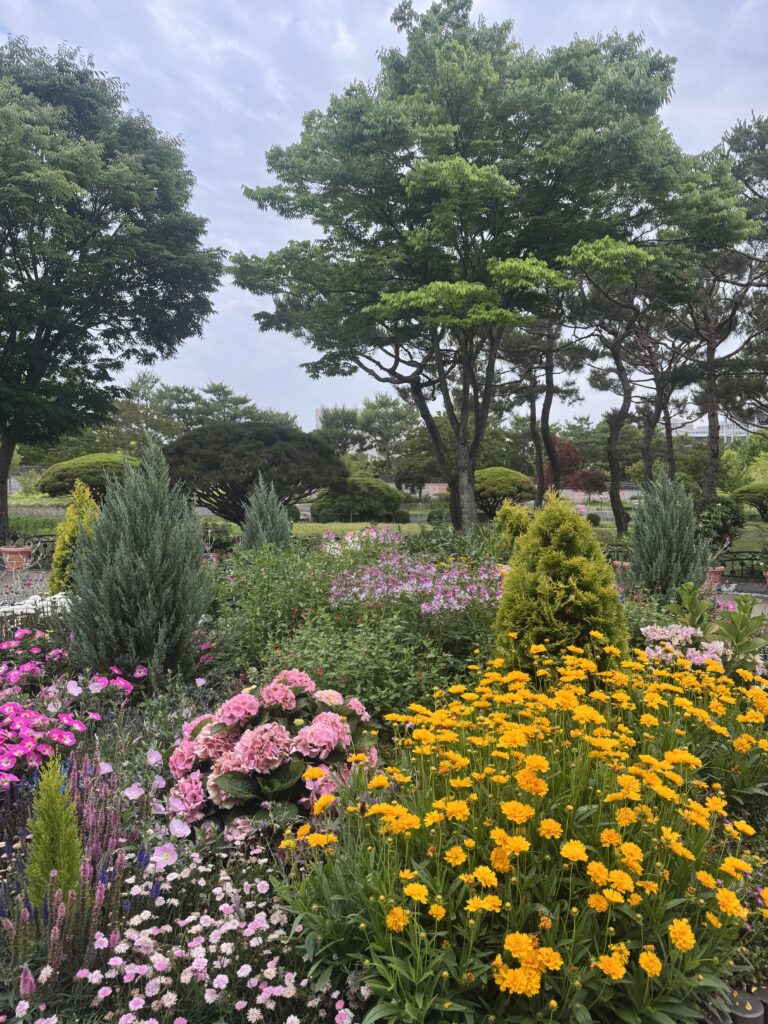
    This is an absolutely massive and beautiful park with a huge outdoor concert area. When we were there, a few well known Korean rappers were performing, so we stopped to watch for a while.

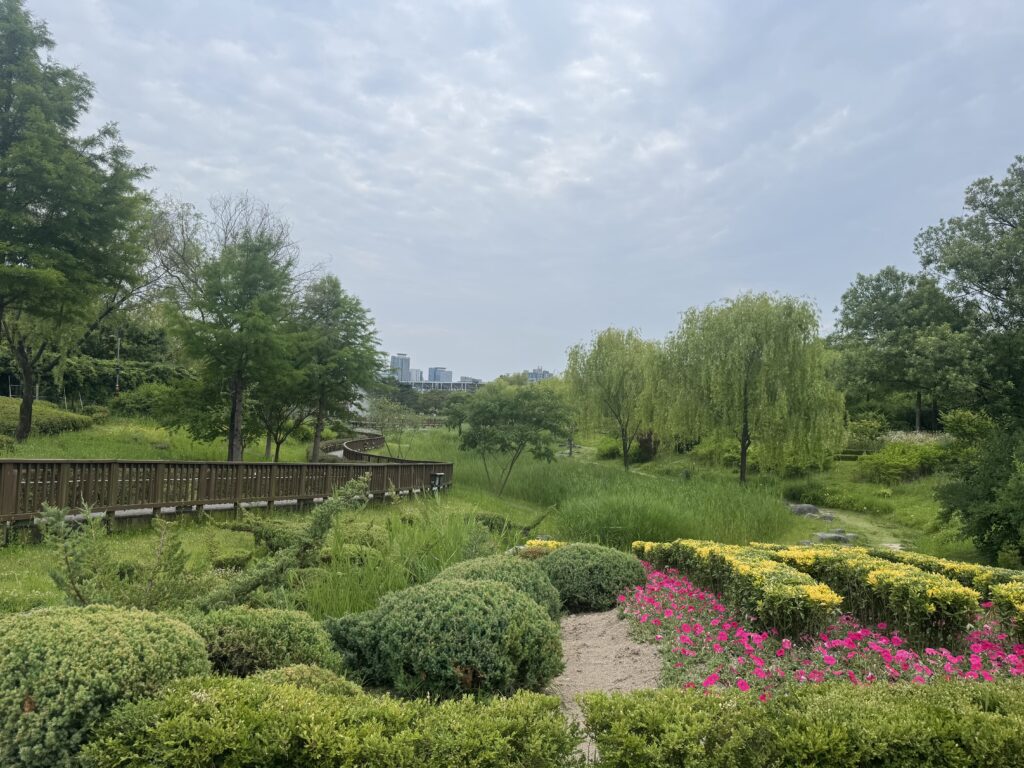
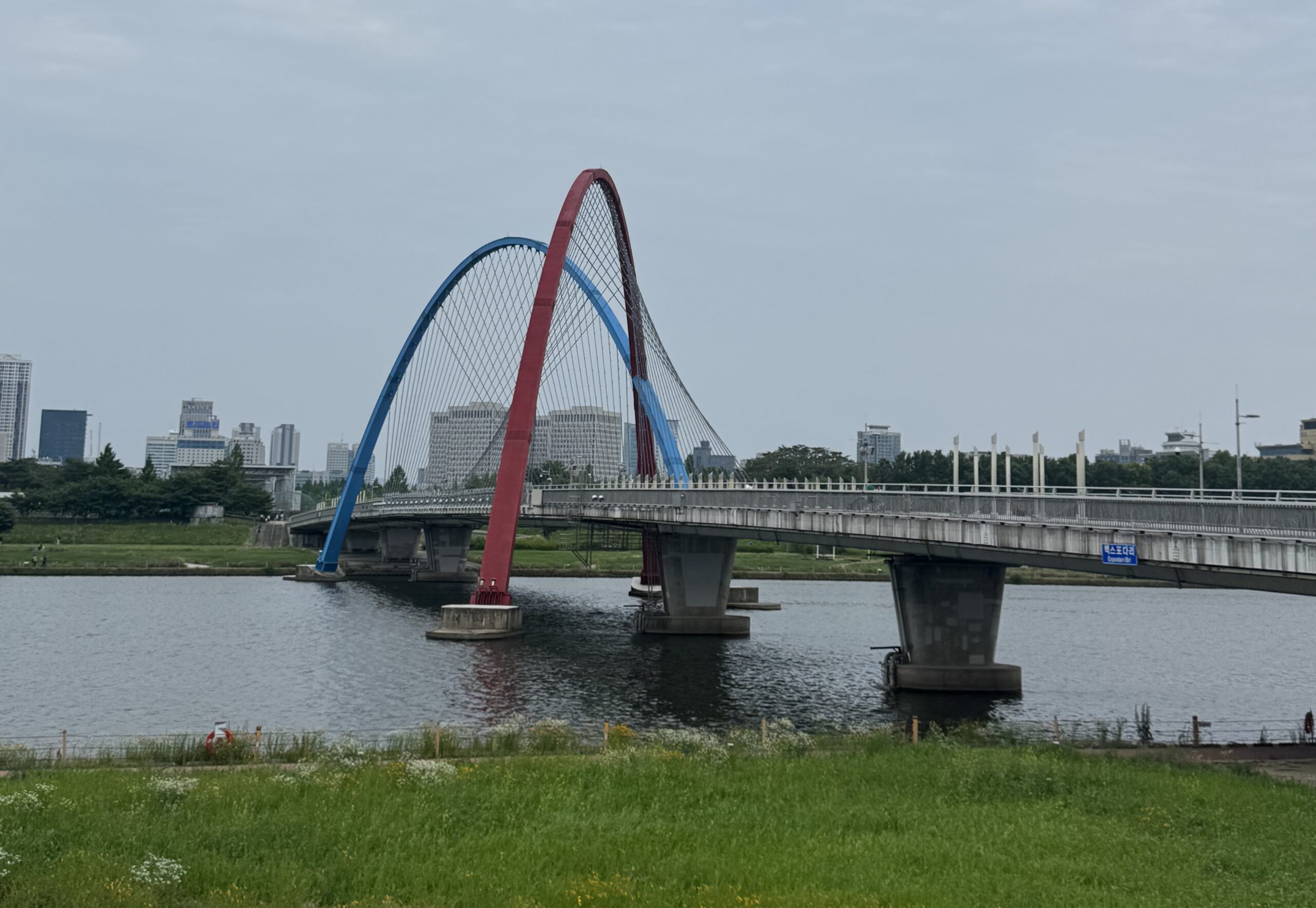
    It’s called Hanbat Arboretum (Hanbat was the original Korean name for Daejeon and is still used occasionally around the city), but the arboretum was only one part of the park. It was filled with different types of colorful flowers, with a gazebo overlooking a lake full of fish and water lilies. The gazebo sat beside a tranquil boardwalk that snaked through tall grass and water and made for a pleasant stroll through the nature.

    I liked that in Daejeon, even outside of the park there was a lot of wild nature throughout the city as well. It reminded me of being on the outskirts of the city in San Francisco where there are hiking trails snaking into the nearby mountains.

    There are plenty of beautiful parks and street trees in Seoul, but Daejeon has so much more accessible greenery everywhere. Even just walking between bus stops, I sometimes felt like if I wandered off the sidewalk for a few minutes, I’d find myself lost and completely immersed in the neighboring forest.

    7:30 PM — Jinro House (진로집)

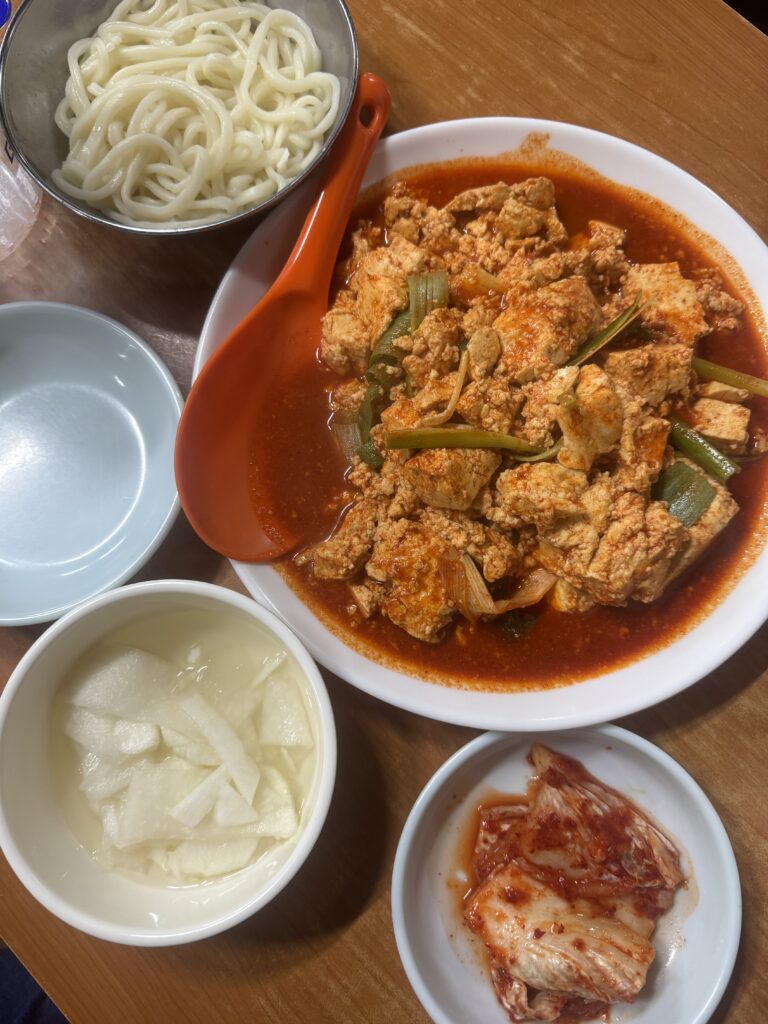
    Next we went to Jinro House to eat dubu duruchigi (두부두루치기), spicy stir-fried tofu dish that is one of Daejon’s signature local foods. This restaurant is known for being a local favorite, and now I know why. It was so good, I can’t wait to go back to Daejeon and eat it again. Soft tofu is simmered in a spicy red sauce, and you can order it with noodles or rice.

    You can order medium or spicy, and I personally love spicy food and would normally always choose spicy, but the waitress warned us that medium was already quite spicy, so we went with medium. Can confirm, the medium is sufficiently spicy even for me. I’d say the spice level was higher the Shin ramen, maybe bordering on Buldak level but not quite. If you go to Daejeon and like spicy tofu, you have to eat here!

    8:30 — Back to the train station

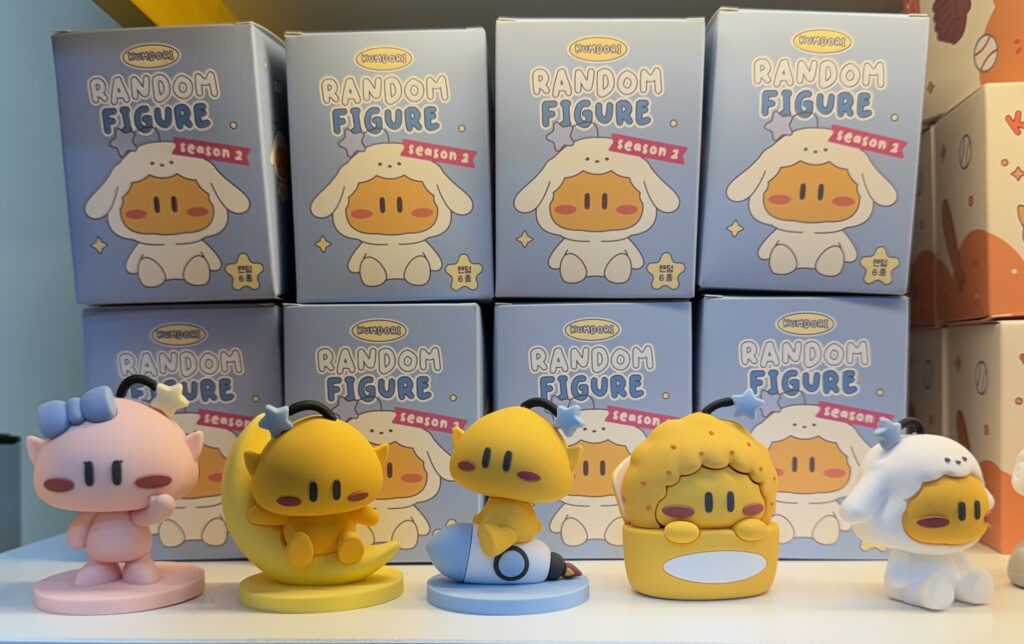
    My train back to Seoul was at 9pm, and since Sungsimdang was nearby Jinro House, we actually stopped by again so I could buy some fresh soboro for my friends back in Seoul. While waiting for my train in Daejeon station, we checked out a cute souvenir store that sold a bunch of merch featuring Daejeon’s mascot, Kumdori (꿈도리) “The Little Dreamer”, a space fairy originally created for the 1993 Daejeon Expo.

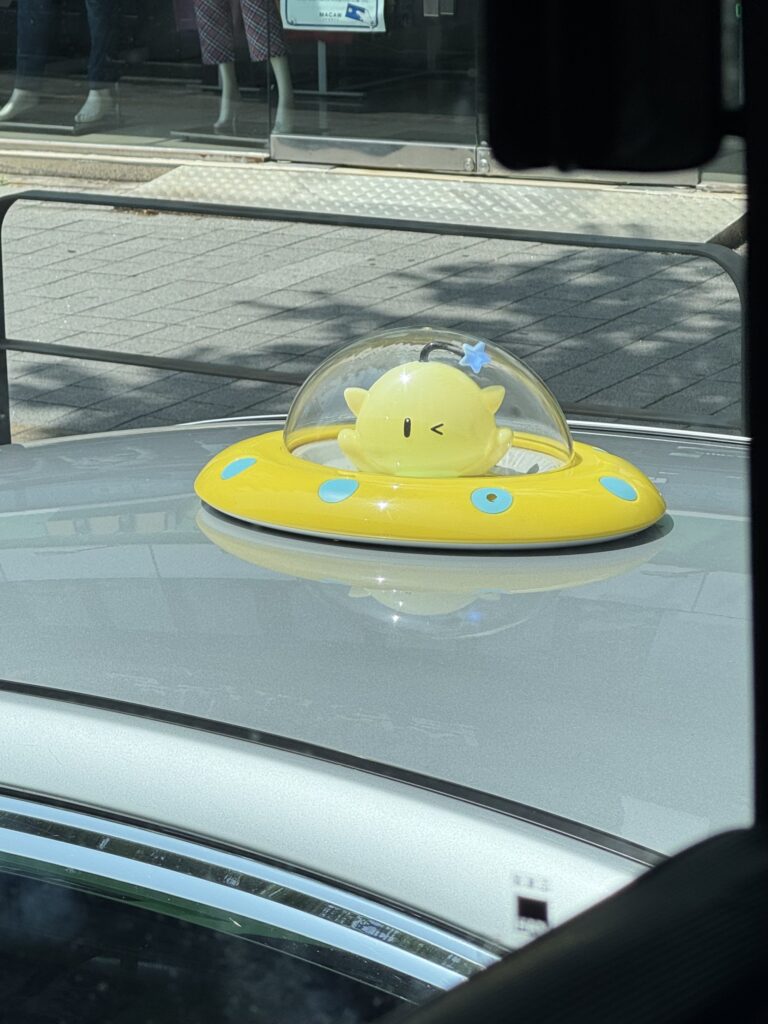
    He’s been redesigned since, so they had merch showing both versions. The modern redesign is bubbly and adorable, but I also love the original because the art style feels more nostalgic and full of personality. Even the taxis here have the character on the roof of each car!


    All in all, it was a great day, and I plan to go back to Daejeon sometime this year! Even though it took a while to get around the city using public transportation, I liked seeing how the subway design was different from Seoul and Busan, and I loved being so near all of the nature throughout the city. The air was noticeably fresher than in Seoul.

    Naver Maps List

    If you use Naver Maps, I made a list of all these places, plus a few places I’d like to go but haven’t had a chance to check out yet. I try not to include an overwhelming amount of options in these lists because personally, 5-10 targeted suggestions feels way more helpful than a list of 50 suggestions. The list is called City of Bread, because you know… there’s nothing important in Daejeon besides bread, or at least that’s the joke 😀

    People joke a lot about Daejeon being no fun, but if you’re the type of person who appreciates a slower atmosphere, I found there was plenty to do while still being a relaxing day trip. If you go, let me know what you think~

    Love,

    B.

  • “Teacher Tired”

    I knew teaching was hard, but nothing could have prepared me for the special type of fatigue I’d face as a teacher. After a long day of teaching, I feel particularly drained in a way I’ve never felt. Not when I was a student athlete, nor when I was overloaded on credits in college and was pulling all-nighters, nor during my internships or when I was working up to five different jobs in NYC to piece together a salary. I mean never.

    I don’t even know how to describe this feeling. No matter how many hours I sleep, handling the kids all day wipes me out, especially when I teach certain classes with some particularly rowdy students. Maybe my personality is simply not well suited for public school teaching, but I think this is honestly a universal feeling among all teachers at some point. Here are some ways fatigue from teaching has changed my thoughts and habits.


      1. I eat better.

      It’s simply necessary. If I don’t pay close attention to my nutrition, I inevitably get sick over and over again, either from the stress of managing a classroom of energetic students all day or from the exposure to germs from yelling over the energetic students all day, every day. Luckily my school provides pretty nutritious meals for lunch. It’s also easier to get nutritious meals at an affordable price in Seoul than in NYC, but unhealthy options are just as readily available, so I still think my job has influenced my improved food choices more than simple convenience. It would definitely help to sleep more as well, but I’ve found that sleep is a harder factor to control than nutrition while I’ve been in Seoul.

      2. I value silence more.

      I used to be the type of person who filled my day with social activity and could be reenergized from a conversation with a friend, but now I need to mindfully schedule times to enjoy silence. Working in a public school all day means I only ever have maybe a few minutes of silence at a time, and even after school hours when I am working in my office, I can hear the children shouting outside my door as they play with their friends or attend their afterschool classes, many of which also take place in the public school building. Sometimes I notice the silence when I’m alone in my room at home and feel a strange overwhelming sense of appreciation for it. That’s where we’re at now.

      3. Coffee is back.

      I was an avid coffee drinker during college but after graduating I had cut back a bit. Now that I’ve started teaching, I probably consume about as much caffeine as I did during peak finals season back in college. My morning coffee ritual has become necessary to survival. It allows me to get to work and fall into a familiar routine immediately without thinking too much about what to do next, because once my classes start, my brain is switched on for at least five hours straight. I can get through a day without my morning coffee, but whenever that happens, I feel slightly off or low energy. I basically give presentations, field questions, facilitate projects and activities, think on my feet, watch the clock, make hundreds of different decisions, and manage a crowd of humans with underdeveloped brains for hours at a time every day, work that has definitely increased my caffeine dependency.

      4. I crash more often.

      I said earlier that getting more sleep would help me and this is absolutely true, because there are times when I simply crash. I fall asleep anywhere (usually at my office desk or somewhere at home) and don’t even know when it happened. This is another quirk of the job that I haven’t experienced before, but I have heard of other teachers suddenly needing ten hours of sleep a day in their first few years even if that wasn’t their regular schedule before. I totally understand this now. Something about this job causes my brain to require more sleep than before. It’s really physical exhaustion, but more mental and emotional exhaustion, so sleep is really important. The crashing problem has gotten better over time, especially if I maintain my nutrition, good sleeping habits, and emotional regulation skills, but my point is that I have never needed to pay so much attention to these things to function daily.

      5. I think several days, weeks, or even months ahead

      Curriculum planning is just like that. I do follow the YBM curriculum, but it is a bit too short to fill the whole school year, so I work carefully with several different English co-teachers to plan out the lessons for the year months in advance. The plan is constantly changing to adapt to different things that come up along the way, and planning for my winter and summer English camps is an entirely separate and even more complicated matter. Often I rarely finish a day on Friday without thinking about exactly what I have to accomplish first thing on Monday in order for a Wednesday next month to run smoothly, or something like that.


      Teachers really get all types of fatigue.

      Decision fatigue, performance fatigue, social fatigue, compassion fatigue, burnout, everything. I had a fellow teacher once tell me she feels like a clown. Every day is a performance, and just like in show business, the audience doesn’t care if you’re tired. You cannot have a low productivity day. The kids show up to class every day, government mandated.

      Compassion fatigue is one I learned about recently. It’s commonly experienced among caregivers, healthcare workers, therapists, and the like. Teachers deal with a lot of emotional labor every day: responding to student emotions and problems, reading emotions, listening intently, explaining and understanding, dealing with sudden crises. Capacity for empathy can literally run out. I’ve experienced this more as feeling emotionally numb after teaching for a while, especially if a lot happened that day. Kids fight in class (sometimes physically hitting each other), kids come to me crying, everyone needs me to explain something, everyone’s question needs individual attention, surprises come up like a mandatory training or meeting. Specifically as an EFL teacher, sometimes kids will rant to me about something while speaking entirely in Korean and I have to really lock in to catch onto what they’re saying, or sometimes I have to take over a class on my own with no co-teacher to help with translating complex instructions into Korean. That’s just the job I signed up for, but the emotional side effects have taken me by surprise at times.

      Although, when the kids are happy and excited, it does boost my mood a lot. The students’ moods and attitudes have a huge impact on my own, so good days are good, but children are so fickle, and that is also part of the emotional fatigue.

      Social pressures here do not help.

      I find it very hard to take a day off, even sick days, because of the social pressure not to, and because of the sense of responsibility to the students, and because the Seoul Metropolitan Office of Education Coordinator strongly advised us to never take days off during the school year and to consider the burden on other teachers when taking sick days. It seems to be a very complicated process to get substitute teachers here, so if someone is sick, other teachers often pick up the slack on top of their regular load.

      Another stress point I was not prepared for was the amount of pressure teachers feel from parents, in a way that I think is different from public schools in the U.S. Parents have a huge influence over schools and teachers, and even though I personally do not interact with parents, I still can feel their influence creeping into school policies and politics. This limits the way we can manage classrooms, and even classroom management strategies that seem super light and acceptable to me as an American feel more restricted.


      Now it seems like I have only complaints, but most of the time it’s not too bad, and as the native speaking English teacher on staff I have it way easier than my co-workers in many respects. I do feel that teaching is every bit as rewarding as they say. I’m just also saying that the teaching fatigue is on a different plane in a way I really didn’t expect. It’s like my life has reorganized more around recovery to keep me going just one more day. I realize that may sound similar to any 9-5 job, but I do think this is truly a different type of tired that is unique to teaching, hence the term “teacher tired.” Wish me luck this week.

      Love,

      B.

    1. How I Ended Up Teaching In Korea

      Hi friends,

      I can’t believe I’ve been teaching English at public school in Seoul, Korea for about ten months now!

      I’ve known for a long time that I wanted to come to Korea but wasn’t set on the means. I had studied in Seoul for a semester as an exchange student and have many treasured memories from that time, but it was during the tail end of COVID which limited the experience somewhat and the time felt far too short. I think I was a completely different person back then as well and am experiencing everything very differently this time around.

      Fresh out of graduation in 2024 with a design/media degree in New York City, I felt there weren’t many opportunities available to me. All of my friends had been struggling to land full time jobs for the past year, and I didn’t have much better luck, so I did what I could to pay my astronomically high rent in downtown Brooklyn. I continued my college part time job baking macarons at a bakery near Times Square, I picked up some freelance design and video editing gigs, and I worked part time doing teaching and design work for an educational nonprofit that helps neurodivergent students in the city develop creative technology and career skills.

      I can’t remember how I found out about EPIK (English Program In Korea). I think I must have googled something obvious like “working abroad in Korea.” It seemed like a great opportunity during a time when cost of living in NYC was climbing week by week. I could go teach English at a public school in Korea, and EPIK, a program within the Korean Ministry of Education, would provide support with housing and airfare, discounted national health insurance, visa sponsorship, and training.

      I decided in summer of 2024 that I would apply, but the next application window at the time opened in February 2025. I felt that this was shockingly late because if I applied in February and was hired, I would have to move to Korea within 6 months to start the program in August 2025, but if I wasn’t hired, I would’ve been waiting almost a full year just to end up with nothing. I felt confident that I would be able to go, however, and just continued maintaining my multiple sources of income and enjoying my time in NYC until I could apply.

      I applied 2 weeks after the application window opened. I knew the program had been getting more competitive in recent years and had it in mind to apply the very day it opened, but during “my year of rest and relaxation,” I had gotten complacent rather then anticipatory. Worried that taking 2 weeks to start had already set me too far behind, I completed the entire application in one sitting while I was waiting for a flight to California in JFK airport in New York.

      The application was quite long and detailed. I had to provide details on my school education dating back to my elementary school days, as well as a headshot, career background, 2 letters of recommendation following an incredibly specific format, any connections to Korea, and details on my recent travels and other international experiences. I also needed to upload a full sample lesson plan along with any supporting materials. After that, there were 6 essay questions to complete. I wrote them all in one go and barely took a second look at them before submitting. I had thought a lot about applying during the past year and knew what I wanted to say already, and I was eager to submit my application and be done with it. I had this feeling that once I stepped foot on my plane, I might not revisit the application for a long time. I clicked submit and boarded the plane. It was February 15th.

      I received a request for an interview on March 21st and scheduled it for April 2nd, over a week later. I wanted to use the week to prepare, but I wasn’t sure exactly how to prepare for this interview. I think I was working on some nonprofit and freelance projects at the time and didn’t actually spend much time prepping at all. The day before the interview, I looked up some common EPIK interview prep questions online and briefly read through the little I could find, then watched a couple videos of past EPIK teachers talking about their experience, but honestly, finding any in depth information on the interview process was difficult.

      I went in feeling unprepared but felt relatively confident about my answers. When asked about what region I preferred to placed in, I said I had no preference but chose Gyeonggi-do in my written application because it might be closer to my distant relatives in Seoul. I was one hundred percent convinced that there was no way I could possibly be placed in Seoul as it is incredibly competitive. I had spent the past six years of my life in a big city anyway and didn’t mind the chance at a quieter, slower lifestyle, so I didn’t even ask. As it turns out, I ended up in Seoul anyway!

      My least favorite part of the interview was when the interviewer gave me an age group and topic, and I had to teach a lesson on the spot for her. She gave me about 3-5 minutes to prepare, and then I had to pretend I was teaching a class of students but nobody was there, and the interviewer didn’t interact with me either. I was instructed to just imagine I was receiving answers to my questions.

      It was painfully awkward but didn’t last more than a few minutes. I think they wanted to evaluate my pronunciation and clarity of speech when speaking to children, which makes some sense, but I hated it. The interviewer also gives revision suggestions on your essays because EPIK sends your full application to each school, and the school has the ultimate say on who to hire. My interviewer had some light comments on my lesson plan but told me my essays were incredibly well written and she had no notes (super proud of that considering I wrote them all at once while sitting at an airport gate under a time crunch).

      I received the email that I had passed 5 days later and immediately got hit with a mountain of required documents and supplementary forms to fill out. Acquiring all the necessary documents and completing the forms took me nearly two months. I received several warnings about making sure the pages are in exactly the specified order when I mail them, do not use folders or staples, a binder clip may be permissible, etc, etc.

      To some extent placement is first come, first served depending on how quickly you can properly submit the proper documents, so I was often stressed out navigating bureaucratic red tape to get everything submitted as soon as possible. I was living in NYC and a lot of my government documents were mailed to my family address in California, so my poor father had the task of very meticulously organizing and compiling all the documents for me.

      I was told I should delay booking a flight until the Seoul Metropolitan Office of Education (SMOE) coordinator reached out to confirm a date of arrival, so I continued waiting and waiting throughout the summer, watching the flight prices climb higher and higher. In hindsight, I should’ve just booked a flight early even if the date was wrong because I did know that I shouldn’t be later than August 19. The fear was that I’d arrive too early and scramble to find shelter in a foreign land. By the time I could confirm the flight date, the set airfare allowance provided by EPIK didn’t even cover the full cost of the flight.

      Anyway, clearly I made it to Korea eventually! I have heard almost all EPIK teachers in Seoul teach elementary and I am no different. I teach grades 3 through 6. Ten months in and I’m feeling very settled here. Although there are times I miss my friends, family, go-to eateries, driving, redwood forests, and salty snacks, I’m reluctant to return. The state of affairs back in the States doesn’t seem any better than when I left and the price of a meal in NYC is terrifying to think about after being gone so long.

      But to friends who may be reading, not to worry! I plan to visit toward the end of this year. And what lies beyond that, we shall see.

      In future posts, I can write more about on how I’ve spent my time here and my experiences teaching. I will also talk in more depth about EPIK and the application and training process for anyone who may be interested. There is plenty of information I wish was available to me when I was applying so I’ll have plenty to say. Stay tuned.

      Love,

      B.